

Friday June 26, 2026 4:29 pm ECONOMYNEXT – Sri Lanka’s Colombo Stock Exchange indices closed flat on Friday, CSE data showed, with the benchmark All Share Price Index moving up a marginal 0.01 percent. The ASPI was up 2.77 points at 22,409.81, while the more liquid S&P SL20 was…
Friday June 26, 2026 4:29 pm
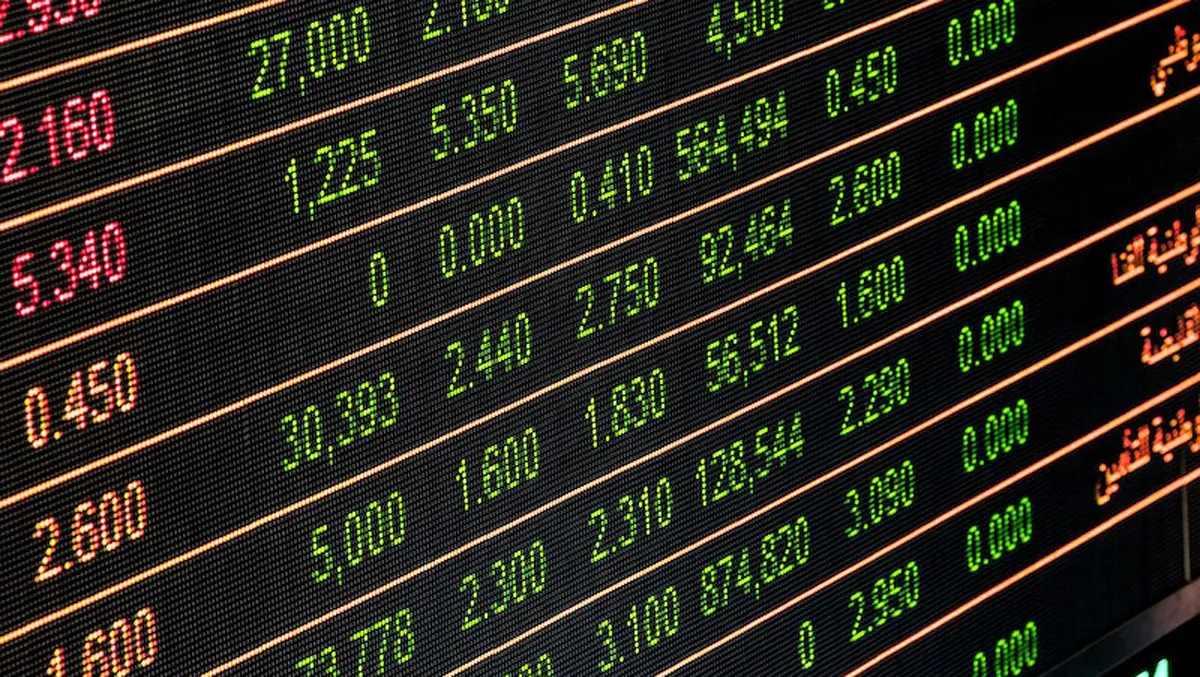
ECONOMYNEXT – Sri Lanka’s Colombo Stock Exchange indices closed flat on Friday, CSE data showed, with the benchmark All Share Price Index moving up a marginal 0.01 percent. The ASPI was up 2.77 points at 22,409.81, while the more liquid S&P SL20 was up 0.17 percent, or 10.39 points, at 6,253.14. Positive contributors to the ASPI were DFCC Bank (up 2.47 percent at 135.00 rupees), Melstacorp (up 0.80 percent at 189.50 rupees), Central Finance Company (up 1.74 percent at 234.00 rupees), Richard Pieris and Company (up 3.01 percent at 30.80 rupees), and Dialog Axiata (up 0.64 percent at 47.30 rupees). John Keells Holdings (down 0.49 percent at 20.40 rupees), Access Engineering (down 1.78 percent at 77.20 rupees), Haycarb (down 2.27 percent at 161.50 rupees), and Aitken Spence (down 0.79 percent at 156.25 rupees) were top negative contributors. Market turnover was 1.91 billion rupees. Capital goods led turnover with 615.8 million rupees. Nations Trust Bank announced the allotment of its Basel III compliant, Tier 2, unsecured, subordinated, redeemable 5-year, 7-year, and 10-year debenture issue, which features a non-viability conversion option. Out of the 150 million debentures issued to raise up to 15 billion rupees, 112.5 million debentures were allotted on a preferential basis, while other applicants received a full allotment up to 150,000 debentures and a 32.6 percent allotment on the remaining balance. Shares of Nations Trust Bank closed at Rs.318.00, down 0.08 percent. (Colombo/June26/2026)
Friday June 26, 2026 4:17 pm
Friday June 26, 2026 4:17 pm
ECONOMYNEXT – Sri Lanka’s Parliament approved the latest tax amendments last week and the Department of Inland Revenue (IRD) will implement them from July 1 Here is the simplified version on the breakdown of what these changes actually mean for consumers’ wallet, business, and daily life. 1. Daily Life & Personal Finances
Selling Your Personal Car is Tax-Free: If you sell your personal motor vehicle (one that isn’t used for business and doesn’t get a business depreciation allowance), any profit you make is entirely tax-free. On the flip side, if you sell it at a loss, you cannot use that loss to reduce your other taxes. Life Insurance Payouts are Protected: Money you get from your life insurance, whether it is a maturity payout, a bonus, or a claim, is generally not taxed. The only exception is if the policy was explicitly tied to your job or business income (like a company pension scheme). Back Pay Relief for Employees: If you were suspended or faced disciplinary action and finally received your back pay or arrears in a lump sum, you get a tax break. The government will give you relief so you aren’t unfairly pushed into a higher tax bracket all at once for past years. Who Doesn’t Need to File a Tax Return? If your only income comes from a standard job, or if your side-service income is under Rs. 5,000 and your tax was already fully deducted by whoever paid you, you are generally exempt from the headache of filing an annual income tax return.
2. Strict Rules on Cash Transactions The government is cracking down heavily on cash to bring transparency to the economy.
The Rs. 500,000 Limit: If you pay someone more than Rs. 500,000 in a single day, whether for a single purchase or across a series of connected payments, you cannot pay in raw cash. How You Must Pay: You must use traceable methods: an “Account Payee Only” check/bank draft, a credit/debit card, online banking, or a direct bank deposit. The Penalty: If you use cash anyway, you cannot claim that payment as a business expense or count it toward the cost of a business asset to lower your taxes. Note: This cash restriction does not apply when paying government bodies or banks.
3. The Spread of Withholding Tax (WHT) Withholding Tax is where the person paying you takes the tax out before the money hits your account and sends it straight to the government.
A 5 Percent Tax on Professionals: If you are a resident individual providing professional services such as teachers, tutors, consultants, doctors, lawyers, engineers, artists, or IT professionals and your monthly service fee from a payer exceeds 100,000, a 5% tax will be deducted upfront. Low-Income Earners Bank Relief: If you are a resident with low overall income, you can sign a self-declaration form and give it to your bank so they don’t automatically deduct tax from your small interest earnings. Warning: Lying on this form carries a hefty fine of up to Rs. 200,000. No Fees for Tax Certificates: When a bank or entity deducts tax from you, they must give you a Withholding Certificate completely free of charge. Banks are strictly forbidden from charging you a fee for this paper.
4. The Mandatory TIN (Taxpayer Identification Number) The TIN is becoming a vital part of your everyday administrative life. For companies, registration must happen within 30 days of opening. You now must have a TIN to do any of the following:
Open an institutional/business bank account. Register a vehicle. Register land or property ownership. Register a new business. Transfer company shares. Get a credit card or get a building plan approved.
5. Donations, Charity, and Capital Gains
Gifts to the Government: If you donate or gift an asset to the Government or a State University, it is valued strictly at what it cost you. This means you will face zero capital gains tax on that donation. Approved Charities: If you donate to educational, health, or social service groups that are officially recognized by the Commissioner General, your donation counts as a qualifying payment to lower your taxable income. New Capital Gains Tax Rates: If you make a profit selling an asset (like property or investments), the tax rate on that profit is set at 15% for individuals/partnerships and 30% for companies and unit trusts.
6. Stronger Enforcement and Fines
Protection for Honest Taxpayers: If you file your tax return on time and pay at least 120% of what you paid the previous year, along with a sworn affidavit that you aren’t evading taxes, the Inland Revenue Department promises not to hit you with unexpected additional tax assessments for that year. Severe Penalties for Hiding/Skipping Paperwork: Failing to register, ignoring requests to appear, or failing to submit your annual tax statements is a serious offense. Following a 30-day warning notice, non-compliance can land you in court facing a fine of up to Rs. 400,000, up to 6 months in jail, or both. (Colombo/June 26/2026)
Continue Reading
Friday June 26, 2026 3:52 pm
Friday June 26, 2026 3:52 pm
ECONOMYNEXT – Sampath Bank and the Sri Lanka Ports Authority (SLPA) launched a real-time dollar payment solution for the maritime industry, the bank said, cutting traditional manual payment processes and streamlining foreign currency transactions across the shipping and logistics ecosystem. This helps shipping lines, freight forwarders, logistics providers and other port users to make instant dollar payments to the SLPA, with real-time settlement and automated notifications, the bank said. Powered by Sampath Bank’s FC Quick Connect platform, the payment solution integrates the bank’s transaction banking capabilities and digital infrastructure to deliver an end-to-end digital payment experience. “The solution delivers secure, real-time payment capabilities that enhance convenience, strengthen transparency and support the continued modernisation of port-related services,” Sanjaya Gunawardana, Managing Director/ Chief Executive Officer, Sampath Bank PLC, said. The Ports Authority uses USD-based billing for some services. “Digital transformation within the maritime sector is essential to strengthening Sri Lanka’s position as a regional logistics hub,” Dr. Parakrama Dissanayake, Advisor to the President on Maritime, Ports and Logistics said. “More than a banking solution, it is a strategic initiative that will enhance efficiency, effectiveness and competitiveness within Sri Lanka’s maritime sector.” The solution establishes a scalable framework that can be extended to other port operators and maritime service providers in the future, the bank said. Its implementation is expected to enhance customer experience, improve cash flow efficiency and support faster trade facilitation across the industry. (Colombo/Jun26/2026)
Continue Reading
Friday June 26, 2026 3:14 pm
Friday June 26, 2026 3:14 pm
ECONOMYNEXT — Sri Lanka is planning to introduce time-of-use (ToU) electricity tariff rates and roll-out smart meters to shift the country’s electricity usage pattern from the night peak to the day peak, Deputy Minister of Power Arkam Ilyas said. ToU tariffs are pricing where electricity cost changes based on the time of day, week day, or season. Ilyas told parliament that the country’s night peak has increased compared to the day peak, which presents an economic challenge for a developing nation where industries require a different consumption structure. The reliance on fossil fuels to generate the bulk of electricity required during the night peak has added further urgency to the proposed transition. “We think that for a developing country, and if there are industries, to run our country we must shift this to the day peak… During the night peak, the electricity we have to use the most at night is generated from fossil fuels,” Ilyas said. The proposed ToU tariffs will not be targeted at all parties, as there is little utility in offering them to renewable energy providers or consumers who already primarily use electricity during the daytime. Instead, the government’s current stance is to offer these rates mostly to domestic consumers. To facilitate the new tariff structure, the government is launching a smart meter project through the state power utility, identifying a specific segment of high-consuming domestic users for the initial phase. “There is a group of about 300,000 to 400,000 within Sri Lanka with a domestic consumption of over 180 units. We are prepared to implement the smart-meter project through the electricity board for all those individuals,” Ilyas said. The government is currently carrying out activities to resolve outstanding issues before implementing the new framework as quickly as possible. In tandem with the smart meter rollout, authorities are also evaluating another proposal to accommodate battery storage systems on a domestic or home scale. (Colombo/Jun26/2026)
Continue Reading
Friday June 26, 2026 1:47 pm
Friday June 26, 2026 1:47 pm
ECONOMYNEXT – Sri Lanka has sold 1,521 million rupees of treasury bills offered on tap at average rates of 10.14 and 10.21 percent, the public debt management office said, bringing the total of bills sold this week to 71.521 billion rupees. Total market subscription was 1,521 million rupees. The debt office sold a 3-month bill at 10.14 percent. The debt office sold a 6-month bill at 10.21 percent. On Wednesday (24) the debt office raised 70 billion rupees of 3, 6 and 12 month bills. All 3 bills were later offered on tap. Read more Sri Lanka Treasury bill yields rise, all bills sold The date of settlement is June 26. (Colombo/Jun26/2026)
Continue Reading
Friday June 26, 2026 11:36 am
Friday June 26, 2026 11:36 am
ECONOMYNEXT – Sri Lanka has asked rooftop solar owners contributing over 300 kw to the national grid to switch off during the upcoming long weekend, and said it will be rolling out a modem installation that will enable the power utility to remotely do so in the future. “We entreat rooftop solar owners generating over 300kw to switch off during this weekend, June 27-29, so we can avoid a system collapse like what happened last Vesak [full moon day]” Deputy Minister of Energy Arkam Ilyas said in parliament on Friday. During the last full moon holiday, Sri Lanka experienced a power breakdown in several areas due to a big rooftop solar share. The power utility struggled to maintain grid stability with rooftop solar as daytime demand fell with factories and businesses closed for the Vesak holiday. The island-nation has had several such instance in the recent past. Sri Lanka cascading power failure fanned by big rooftop solar share: CEBEU “We had to then switch off about 120 feeders,” the deputy minister said, adding that Sri Lanka has around 2,200 rooftop solar owners generating over 100Kw. “We have launched a project to fix a modem for them. Then in such an emergency situation, we will be able to remotely turn the feeders off and avoid power breakdowns in various parts of the country.” The government hopes to install them all by December, Ilyas said.
Opposition legislator Harsha de Silva questioned if the National System Operator, a successor company of the Ceylon Electricity Board, has the power to do so. Ilyas said the operator will act under the Public Utilities Commission of Sri Lanka’s gazetted remit. “System stability is number 1,” he said. (Colombo/Jun26/2026)
Continue Reading
Friday June 26, 2026 11:03 am
Friday June 26, 2026 11:03 am
ECONOMYNEXT – Sri Lanka’s Colombo Stock Exchange indices were trading up on Friday morning, CSE data showed, with the benchmark All Share Price Index moving up 0.20 percent. The ASPI was up 44.99 points at 22,452.03, while the more liquid S&P SL20 was up 0.25 percent, or 15.74 points, at 6,258.49. Positive contributors to the ASPI were Sampath Bank (up 0.88 percent at 144.00 rupees), Dialog Axiata (up 1.28 percent at 47.60 rupees), Central Finance Company (up 1.96 percent at 234.50 rupees), Colombo Dockyard (up 1.34 percent at 132.25 rupees), and LOLC Holdings (up 0.91 percent at 525.00 rupees). John Keells Holdings (down 0.49 percent at 20.40 rupees), Laugfs Gas (down 1.85 percent at 53.00 rupees), Citizens Development Business Finance (down 0.46 percent at 43.50 rupees), and Colombo Land & Development Company (down 3.46 percent at 55.80 rupees) were top negative contributors. Market turnover was 349 million rupees. Diversified financials led turnover with 73.3 million rupees. Lee Hedges concluded negotiations with Amana Bank to sell and transfer its land and premises in Kollupitiya for a total consideration of 2.7 billion rupees, with the transaction completed on June 25, 2026. Lee Hedges shares were trading up 2.52 percent, at Rs.325.75, while Amana Bank was up 1.13 percent at Rs.26.80. (Colombo/June26/2026)
Continue Reading