

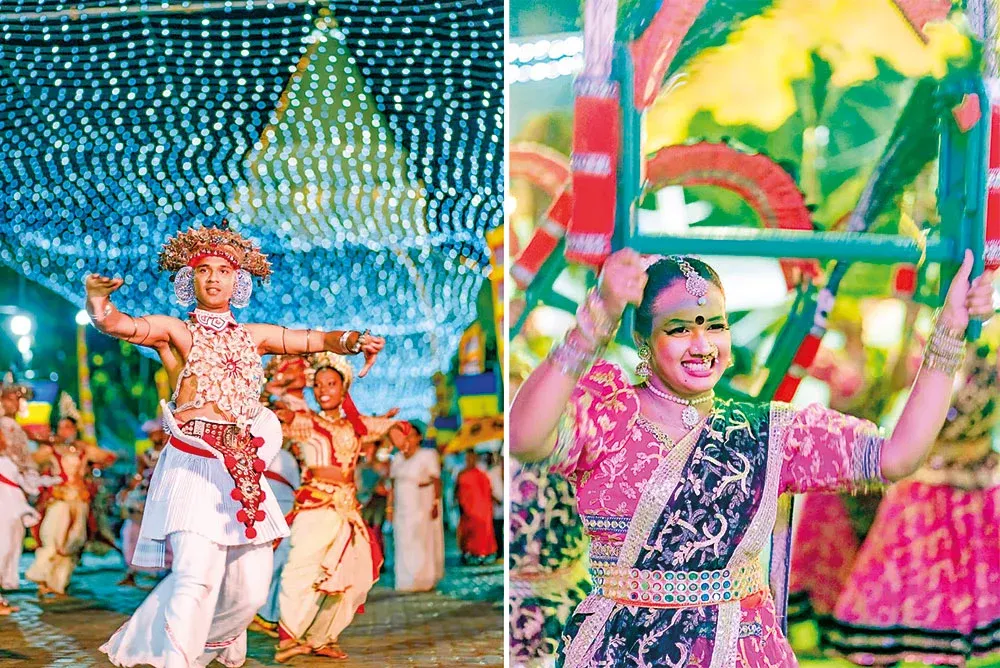
රුහුණේ පෙරහැර මංගල්යයන් ආරම්භ වෙන්නෙ තිස්සමහාරාමයෙන්… තිස්ස පෙරහැරට ගැසට් පත්රයක් නිකුත් කරනවා… තිස්ස මහා පෙරහැරට බිඳින්න ගමේ මිනිස්සු කැට එකතු කරනවා… කලට වෙලාවට තිස්ස පෙරහැර නොපවත්වන්න රුහුණට කරදර… තිස්ස මහා පෙරහැරේ උපත 1900 පොසොන් පොහෝ දා… 1960 ගණන්වල තිස්ස පෙරහැර කරල තියෙන්…
රුහුණේ පෙරහැර මංගල්යයන් ආරම්භ වෙන්නෙ තිස්සමහාරාමයෙන්…
තිස්ස පෙරහැරට ගැසට් පත්රයක් නිකුත් කරනවා…
තිස්ස මහා පෙරහැරට බිඳින්න ගමේ මිනිස්සු කැට එකතු කරනවා…
කලට වෙලාවට තිස්ස පෙරහැර නොපවත්වන්න රුහුණට කරදර…
තිස්ස මහා පෙරහැරේ උපත 1900 පොසොන් පොහෝ දා…
1960 ගණන්වල තිස්ස පෙරහැර කරල තියෙන්නෙ ‘දවස’ පුවත්පත් ආයතනය…
නැකතට දඩ කෙළියේ යෑමත්, ගස් – ගල් ඇදහීමටත් පුරුදු වී සිටි ජනතාව මගඵලලාභී රහත් මුනිවරුන්ගේ පරපුරක් බවට පත්වීමට පාදම සැකසුණේ පොසොන් පොහො දිනයේදී ය. ඒ අනුබුදු මිහිඳු මහ රහතන් වහන්සේ ප්රධාන රාජකීය ධර්මදූත පිරිස වෙතින් ලත්, මහානීය දායාදය වූ බුදුදහමේ මහිමයෙනි. එහෙයින් ‘පොසොන් පොහො’ දිනය දෙවැනි වනුයේ, අසිරිමත් තෙමඟුල සිහිපත් කරන ‘වෙසක් පොහෝ දිනයට පමණි. පොසොන් පොහොය ද මෙරට බෞද්ධ ජනතාව මහත් අභිමානයෙන් සමරන උතුම් දිනයක් බව සැබෑ ය.
අතීතයේ සිට පොසන් පොහො දින රාජ්ය උත්සවය මිහින්තලේ පුදබිමේදී පැවැත්වෙන බැවින් මෙරට බහුතරය පොසොන් පොහොයට අනුරාධපුර, පොළොන්නරුව යන ඓතිහාසික බෞද්ධ සිද්ධස්ථාන වැඳපුදා ගැනීමට යෑමේ පුරුද්දක් තිබේ. දකුණු පළාතේ බෞද්ධ බැතිමතුන් බහුතරය පොසොන් පොහො නිවාඩුවට රුහුණේ සිතුල්පව්ව, කිරිවෙහෙර වන්දනා කරගෙන කතරගම දෙවිඳුන්ගෙ ආශීර්වාදය ලැබ පොසන් දින රාත්රියේ තිස්සමහාරාම පෙරහැර නැරැඹීමේ පුරුද්දක් ද අතීතයේ සිට පවතින බව සැබෑ ය. අනුරාධපුර සහ රුහුණු මාගම් රාජධානිය එකම රජ පෙළපතකින් පැවතුණ මෙරට සිංහල බෞද්ධ රාජවංශයේ සුවිශේෂී රාජධානි දෙකක් බව ද සැබෑ ය. මිහිඳු මහ රහතන් වහන්සේගෙන් ධර්මය අසා පැහැදුණු දෙවනපෑතිස් මහ රජු ‘අනුරාධපුර මහා විහාරය’ ඉදිකර ඇති බවත් ඔහුගේ මුනුපුරු කාවන්තිස්ස මහරජු විසින් රුහුණු මාගම් රාජධානියේ ‘තිස්ස මහා විහාරය’ ඉදිකර ඇති බවත් ඉතිහාස මූලාශ්රවල සඳහන් වේ. ඉනිදු රාජ පෙළපතේ ලේ ඥාතීත්වය ද පැහැදිලි ය. ඒ අනුව රුහුණු රට ප්රධානතම ඓතිහාසික බෞද්ධ සිද්ධස්ථානය බුදුරදුන් වැඩ සිටි සොළොස්මස්ථායනක් ලෙස ප්රසිද්ධ තිස්ස මහා විහාරය බවට ඉතිහාස මූලාශ්ර බොහෝ ය.
එහෙත් පෙර රජ දවසින් පසුව රුහුණු මාගම් රාජධානිය විදේශීය ආක්රමණවලට යටත්ව, දුර්භික්ෂ ඇතිවෙමින් වේගයෙන් ජරාවාස තත්ත්වයට පත් වී ඇත. දානය නොමැතිව භික්ෂුන් වහන්සේ දසදහස් ගණන් අපවත් වූහ. වසංගත රෝගවලට ගොදුරුව, කෑම බීම නොමැතිව සාමාන්ය වැසියන් ද මියගොස් මුළු ප්රදේශයම ජන ශූන්ය බවට පත් වී ඇත. වැව් අමුණු, වෙහෙර විහාර මහ කැලයට යට වී ගියේ ය. කාලයත් සමග මෙරට බෞද්ධ පුනරුදයක් නිර්මාණය වෙමින්, දුර්භික්ෂ පහාව ගිය පසු රුහුණේ වෙහෙර විහාර සොයාගැනීමට ගණින්වහන්සේලා සහ දෑහිතකාමීන් උනන්දු වී තිබේ. එහි ප්රතිඵලයක් ලෙස 1835 වර්ෂයේදී හක්මන, වේපතඉර සුමන සාමණේරයන් වහන්සේ තිස්සමහාරාම වෙහෙර සොයාගෙන ඇත. මුල් කාලයේදී තිස්ස පුදබිමේ ගසක පැලක් අටවාගෙන වැඩසිටි උන්වහන්සේ අප්රතිහත ධෛර්යෙන් යුක්තව කටුකොහොලින් පිරුණු තිස්ස වෙහෙර සුද්ද පවිත්ර කොට පාදම මතු කරගෙන තිබේ. 1873 වර්ෂයේදී වල්පිට මේධංකර මාහිමියන් තිස්ස මහා සෑ රදුන් ජීවමානත්වයට පත්කරලීමේ අධිෂ්ඨානය පෙරදැරිව විහාර කාර්යසාධක සමිතිය පිහිටුවා තිස්ස වෙහෙර ගර්භයේ වැඩ ආරම්භ කොට ඇත. වෝකර් සමාගමේ මූල්ය දායකත්වයෙන් කොළඹ මාලිගාකන්ද විද්යෝදය පිරිවෙනේදී කොත් වහන්සේනමක් නිර්මාණය කරවා ටොන් ගාණක් බර කොත් වහන්සේ කෙළඹ සිට තිස්සමහාරාමයට වැඩමකරවීමට යකඩ භාවිතයෙන් විශේෂ කරත්තයක් ද සාදවා ඇතෙක් ලවා ඇදගෙන යෑමට සැලසුම් කර ඇත. ඒ අනුව 1899 වර්ෂයේ දිනක ඇත් කරත්තයෙන් කරඬු වහන්සේ වැඩමකරවීමේ පෙරහැර ආරම්භ කර මාස තුනකට පසුව තිස්සමහාරාමයට ළඟා වී ඇත.
1900 පොසොන් පොහොය දින තිස්ස මහා වෙහෙරෙ කරඬු වහන්සේ තැන්පත් කිරීමේ පින්කම සංවිධානය කොට සෑය වටා පිරිත් මණ්ඩප හතරක් සකස් කොට දින හතක් පිරිත් පින්කමක් පවත්වා ඇත. එම පින්කමට දකුණු පළාතේ භික්ෂුන් වහන්සේ විශාල පිරිසක් තිස්සමහාරාම පුදබිමට වැඩම කර ඇත. පින්කමට පැමිණෙන භික්ෂුන් වහන්සේට දන් පිළිගැන්වීමට දාන ශාලා, ගිහි පින්වතුන්ට ආහාර ලබාගැනීමට වෙනම ශාලා නිර්මාණය කර ඇත. එම පින්කමේ දායකත්වය දරා ඇත්තේ මත්තල සහ බුන්දල ප්රදේශවල ජීවත් වූ බෞද්ධ ජනතාව ය. තිස්සමහාරාම පින්කමට සනීපාරක්ෂක, ජල පහසුකම් ලබාදීමට එවකට ඉංග්රීසි ආණ්ඩුව විසින් ‘වන්දනා ආඥා පනත’ යටතේ විශේෂ ගැසට් පත්රයක් ද නිකුත් කොට ඇත. පිරිත් පින්කම අවසානයේදී තිස්ස මහා වෙහෙරෙ කොත පැලඳවීමෙන් පසුව එදින රාත්රියේදී පන්දම් දල්වාගෙන, මල් රැගෙන තුන් සරණ සජ්ඣායනා කරමින් චෛත්යය වහන්සේ වටා බැතිමතුන් පෙරහැරේ ගමන් කර ඇත. ‘තිස්ස මහා සෑ රදුන් උදෙසා සිදු කරනු ලැබූ ප්රථම පෙරහැර මංගල්යය ලෙස එම පන්දම් පෙරහැර ඉතිහාසගත ය. එමෙන්ම තිස්ස මහා වෙහෙරට කරඬු බැඳීම එකල රුහුණේ පැවැති විශාලතම පින්කමක් බව ද සැබෑ ය. එම පින්කමට සහභාගි වූ සියලුම ස්වාමින් වහන්සේගේ නම් – ගම්, විහාරස්ථාන වල්පිට මේධංකර මාහිමියන් විසින් ග්රන්ථාරූඪ කර ඇත. එමෙන්ම වල්පිට මේධංකර මාහිමියන් ආරම්භ කරන ලද තිස්ස මහා පෙරහැර තත්කාලීන යතිවරයන් වහන්සේලා මහින්දාගමනයෙන් ශෝභමාන වන පොසොන් පොහොයට සමගාමීව උත්තම ආමිස පූජාවක් ලෙස අඛණ්ඩව මේ දක්වා පවත්වා ඇත. වසරින් වසර දියුණුවට පත් වූ තිස්ස මහා පෙරහැර මේ වන විට ‘රුහුණු රට මහා සංස්කෘතික මංගල්යය’ ලෙස මාසයක් පුරා පවත්වනු ලැබේ. මෙරට පැවැති දුර්භාග්ය සම්පන්න කාලවල පවා සද්ධා හිතකාමීහු ස්වකීය යුතුකම හා වගකීම ඉෂ්ට සිද්ධ කරමින් ‘රුහුණු රට මහා සංස්කෘතික මංගල්යය’ පවත්වා ඇති බව වාර්තා වේ. 1988 – 89 භීෂණ කාලයේදී රාත්රී පෙරහැර පැවැත්වීමට නොහැකි වූ පසුබිමක දහවල් කාලයේදී පෙරහැර පැවැත්වීමට තිස්ස මහා විහාර දායක සභාව කටයුතු කර තිබිණි. කලට වේලාවට තිස්ස මහා පෙරහැර මංගල්ය නොපැවැත්වීම රුහුණට කරදර අත්වන බවට ද ප්රදේශවාසීන්ගේ විශ්වාසයයි.
1900 වර්ෂයේ පොසොන් පොහො දින මල් සහ පන්දම් පෙරහැර ලෙස උපත ලද තිස්ස මහා පෙරහැර ‘රුහුණු රට මහා සංස්කෘතික මංගල්යය’ දක්වා සංවර්ධනයේ කිරීමේ නියමු යතිවරයාණන් වහන්සේ හම්බන්තර පළාතේ ප්රධාන සංඝනායක තිස්සමහාරාම සඳගිරි උභය රාජමහා විහාරාධිපති, ශ්රී කාවන්තිස්ස මහ පිරිවෙනෙහි අධ්යක්ෂ, ශ්රී කාවන්තිස්ස වෘත්තීය පුහුණු මධ්යස්ථානයේ අධ්යක්ෂ, ධර්මකීර්ති ශ්රී ධම්මදින්න පඤ්ඤාලෝක ආචාර්ය දේවාලේගම ධම්මසේන නායක හාමුදුරුවෝ ය. මෙවර පින්කම සාර්ථක කරගැනීමට ද උන්වහන්සේ දැඩි වෙර වීර්යකින් කටයුතු කරන බව පෙනේ. එහෙත් ‘රුහුණු රට මහා සංස්කෘතික මංගල්යය’ ගැන අප සමග කතාබහා කිරීමට උන්වහන්සේ මැළි නොවූහ. පහතින් පෙළගැසෙනුයේ තිස්ස මහා පෙරහැර ගැන ආචාර්ය දේවාලේගම ධම්මසේන නායක හාමුදුරුවො කියන කතාව ය.
“තිස්සමහාරාම පෙරහැර පවත්වන්නෙ ලලාට සහ දන්ත ධාතුන් වහන්සේලාට කරන උත්තම පූජාවක් විදිහට. ඒ වගේම රුහුණේ පෙරහැර මංගල්යයන් ආරම්භ වෙන්නෙ තිස්ස මහා පෙරහැරෙන්. මේ පෙරහැර අවසානවීමත් එක්ක කතරගම ඇසළ පෙරහැර ආරම්භ වෙනවා. 1900 ගණන්වල ඉඳල තිස්ස මහා පෙරහැරට විවිධ ආයතන අනුග්රහය දක්වලා තියෙනවා. 1960 ගණන්වල පෙරහැර මංගල්යයට පූර්ණ අනුග්රහය දක්වල තියෙන්නෙ දවස පුවත්පත් ආයතනය. අලි – ඇතුන් විශාල සංඛ්යාවක් සම්බන්ධ කරල තියෙනවා. නර්තන කණ්ඩායම් විශාල සංඛ්යාවක් සහභාගි කරවලා තියෙනවා. රුහුණට ආවේණික නර්තනාංග විශාල ප්රමාණයක් පෙරහැරෙ ඉදිරිපත් කෙරෙනවා. සෑම පෙරහැර මංගල්යයකටම අලි – ඇතුන්, උඩරට – පහතරට – සබරගමු නර්තන කණ්ඩායම් විශාල ප්රමාණයක් සහභාගි කරවනවා. ඒ කාලේ තිස්ස මහා පෙරහැරේ නොමිලේ නර්තන ඉදිරිපත් කරන නර්තන කණ්ඩායම් හිටියා. දැන් නම් සේරම මුදල් මත තමයි සිද්ධ වෙන්නෙ. ඉස්සර වගේ නෙමෙයි දැන් පෙරහැර කරන්න අතිවිශාල මුදලක් වියදම් වෙනවා. ඒත් ඒ මුදල් අඩු නැතිව ලැබෙනවා. තිස්ස මහා පෙරහැරේ ගමන් කරන අලි – ඇත්තු කුලප්පුවීමේ සිද්ධි වාර්තා වෙලා නෑ. තිස්සෙ වෙහෙරෙ ශක්තිය එතරම් ප්රබලයි…” ආචාර්ය දේවාලේගම ධම්මසේන නායක හිමි තිස්සමහාරාම වාර්ෂික පින්කමේ අතීතයේ සිට වාර්තමානය සරලව පැහැදිලි කළහ. උන්වහන්සේගේ කතාවට තිස්සමහාරාම, සඳගිරි උභය රාජමහා විහාරාධිකාරි රිදීගම ආනන්ද හාමුදුරුවෝ සහ තිස්සමහාරාම මහා විහාර ලේකම් ගෞරව ශාස්ත්රවේදී හේවාපතිරණගේ සමන් කුමාර මහතා ද අඩු වැඩි එකතු කළේ ය.
රුහුණේ බහුතරයකගේ ජීවන වෘත්තිය ගොවිතැන ය. සෑම ගොවියෙක්ම තම වගාවෙන් මුල් පංගුව තිස්ස මහා විහාරයේ දේවාලයට පූජා කිරීම පුරාතන සිරිතකි. තිස්ස මහා පෙරහැර අවසාන වී දින කිහිපයකට පසු තිස්සමහා විහාර දේව මණ්ඩලය ඉදිරිපිට රාත්රිය පුරා ශාන්තිකර්මයක් පවත්වමින් පසුදා හිමිදිරියේ දෙවියන්ට දානය පූජා කිරීම වාර්ෂික පින්කමේ අංගයකි. එම ශාන්තිකර්මයෙන් ප්රදේශයේ ගොවිබිම් සරුසාර වන බව ප්රදේශවාසීන් අතර දැඩි විශ්වාසයක් පවතින බව චන්න සේපාල ගුණවික්රම මහතා අප සමග පැවසුවේ ය. තිස්සමහාරාම ප්රදේශවාසියෙක් වන ඔහු පෙරහැරේ ගමන් කරන නිලමේවරයෙකි. ඔහුගේ පියා ද කාලයක් තිස්ස මහා පෙරහැරේ ධාතු කරඬුව වඩම්මවාගෙන ගිය නිලමෙවරයෙකි. මොහොතකට අපි ඔහුගේ හඬට ද සවන් දුන්නෙමු.
“පිට පළාත්වල ඉන්න ඥාතීන් අපේ ගෙවල්වලට එන්නෙ පොසොන් පෝයට තිස්ස මහා පෙරහැර බලන්නත් එක්ක. අතීතයේ ඉඳල ඒකත් පුරුද්දක් වෙලා. පොසොන් පෝයට තිස්සෙ ගෙවල්, ඥාතීන්ගෙන් පිරෙනවා. අවුරුදු වගේ තමයි. ඒ වගේම මේ ප්රදේශයේ සමහර ගෙවල්වල මිනිස්සු කැට එකතු කරලා ඒවා බිඳින්නෙ තිස්සමහාරාම පින්කම ආරම්භ වෙනකොට. ඒ සල්ලි වියදම් කරන්නෙ පෙරහැර බලන්න ඇවිත් කඩෙඅප්පන් කන්න, විසිතුරු බඩු මිලදී ගන්න. ඉස්සර අන් ඇදීම, පොරපොල් ගැසීම වගේ ක්රීඩා තිස්සමහාරාම පින්කමේ විශේෂ අංගයන් බවට පත් වෙලා තිබුණා. ඒ වගේම තිස්ස පින්කමට දායකත්වය ලබා දෙන්න මාස ගාණකට පෙර සිට ප්රදේශවාසීනුත් සූදානම් වෙනවා. ප්රදේශවාසීන් තිස්සමහාරාම පින්කමට පුදුම භක්තියක් තියෙන්නෙ. තිස්සමහාරාම වාර්ෂික පින්කම ගමට, රටට මහා ශාන්තිකර්මයක් බව ප්රදේශවාසීන් තුළ දැඩි විශ්වාසයක් තියෙනවා. අපේ තාත්තා පළමුවරට තිස්ස මහා පෙරහැරෙ නිලමෙට ඇඳල තියෙන්නෙ 1972 අවුරුද්දෙ. ඒ කාලේ පෙරහැර සංවිධානය කරපු හැටි තාත්තා කියනකොට අහගෙන ඉන්න ආසයි. දායක සභාවේ සාමාජිකයන් මාස ගාණකට පෙර ඉඳල පෙරහැර සංවිධාන වැඩ පටන් ගන්නවලු. ප්රථමයෙන්ම අලි හාම්පුතුන් හොයාගෙන ගිහින් බුලත් හුරුළු දීලා අලි – ඇතුන් ඉල්ලා හිටිනවලු. ‘අලි බැඳල ඉන්නෙ කැලේ. ඒ තැන්වලට ගිහින් ඇත්ගොව්ව එක්ක කතා කරගන්න…’ කියල අලි හාම්පුතුන් කියනවලු. අලි – ඇතුන් බැඳල ඉන්න තැන් හොයාගෙන දවස්, දෙක තුන තාත්තල පයින් ඇවිදගෙන ගිහින් තියෙනවා. නිදාගෙන තියෙන්නෙ ගල් උඩ. ඇත්ගොව්වො පෙරහැරට අලි – ඇතුන් අරගෙන ඇවිත් තියෙන්නෙත් පයින්. සමහර අලි – ඇතුන්ට තිස්සමහාරාමයට එන්න දවස් පහ – හය ගිහින්. එහෙම එනකොට රෑට අලිය බඳින තැනට අසල්වාසීන් පොල්අතු, කිතුල්, කෙසෙල් ගස් ඇතිවෙන්න ගෙනත් දානවලු. පෙරහැරට සහභාගි වෙන අලි – ඇතුන්ට කන්න තිස්සමහාරාමයේ මිනිස්සුත් ඇතිවෙන්න කෑම ගෙනත් දීලා. අදටත් අපේ ගම්වල මිනිස්සු පෙරහැරට එන අලි – ඇතුන්ට ඇතිවෙන්න කෑම ලබාදෙනවා. ඒ වගේම සතරපේරුවේ දායකයො, තිස්සමහාරාමයේ ව්යාපාරිකයො පෙරහැර මංගල්යය සාර්ථක කරගැනීමට උපරිමයෙන්ම දායකත්වය ලබාදෙනවා. තිස්සමහා පින්කම සාර්ථකව පැවැත්වීමට අපේ නායක හාමුදුරුවෝත් ගෝල හාමුදුරුවොත් පුදුමාකාර විදිහට කැපවෙනවා…”
‘රුහුණු රට මහා සංස්කෘතික මංගල්යය’ මෙවර ආරම්භ වූයේ ජුනි මස 01 වැනිදා ය. එදින සිට 24 වැනිදා දක්වා දිනපතා ධර්ම දේශනා, මහා බෝධි පූජා පවත්වනු ලැබිණි. ජුනි මස 18 වැනිදා සිට අටවිසි බුද්ධ පූජා පින්කම ද ආරම්භ කෙරිණි. ජුනි මස 19 වැනිදා සිට 26 වැනිදා දක්වා සති පිරිත් දේශනය පැවැත්විණි. ජුනි මස 17 වැනිදා සිට 30 වැනිදා දක්වා මහා සංඝගත දකිෂිණා පැවැත්වෙනු ලැබේ. ජුනි මස 25 වැනිදා දේවදූත පෙරහැර, මහා නෙළුම් මල් පූජාව, දොරකඩ අස්න හා අනුශාසනා අස්න දේශනාව පවත්වනු ලැබිණි. ගිතෙල් පහන් පූජාව සහ පන්දම් පෙරහැර ජුනි මස 26 වැනිදා පවත්වනු ලැබිණි. තෙසැත්තෑ ඤාණ පූජාව සහ ශ්රී දළදා උපහාර පෙරහැර ජුනි මස 27 වැනිදා පැවැත්වීමට නියමිත ය. ශ්රී ලලාට ධාතු උපහාර පෙරහැර 28 වැනිදා පැවැත්වීමට කටයුතු සංවිධානය වී ඇත. තිස්සමහාරාම රන්දෝලි පෙරහැර පවත්වනු ලබන්නේ ජුනි මස 29 වැනිදා රාත්රියේ ය. කිරිඳිඔය විජිතපුර නුගය අසලදී චාරිත්රානුකූලව දිය කැපීමේ මංගල්ය ඊට පසු දින සිදු කෙරෙන අතර එදින රාත්රීයේදී පුණ්යානුමෝදනා බෝධි පූජාව පැවැත්වීමට නියමිත ය. ජූලි මස 04 වැනිදා ශාන්තිකර්මය පවත්වමින් ජූලි මස 05 වැනිදා මහා දේව දානයෙන් රුහුණේ මහා සංස්කෘතික මංගල්යය අවසාන කරනු ලැබේ.
1900 වර්ෂයේ ප්රථම පොසොන් පෙරහැර වෙනුවෙන් ‘වන්දනා ආඥා පනත’ ප්රකාරව නිකුත් කරන ලද ගැසට් පත්රයට අනුව සෑම වර්ෂයකදීම තිස්ස මහා පෙරහැරට රාජ්ය අනුග්රහයෙන් සියලුම සනීපාරක්ෂක කටයුතු ජල පහසුකම් සම්පූර්ණ කරන බවට ගැසට් පත්රයක් නිකුත් කිරීම ද විශේෂත්වයකි. මෙවර ද රාජ්ය අනුග්රහය සහිතව පවත්වනු ලබන ‘රුහුණු රට මහා සංස්කෘතික මංගල්යය’ විචිත්රවත් අන්දමින් පැවැත්වීමට තිස්සමහාරාම විහාරයට එකතු වී සිටින ජනතාව හැකි උපරිමයෙන් දායකත්වය ලබාදෙන අයුරු අපගේ ද නෙත ගැටිණි. ඔවුන්ගේ කැපවීම දුටු විට තිස්ස මහා පින්කමේ අවසාන රන්දෝලි පෙරහැර නැරඹීමට මගේ සිතේ ද දැඩි ආශාවක් ඇති විය.
තිස්සමහාරාම පෙරහැරෙන් පසු කතරගම ඇසළ පෙරහැර…
තරංග රත්නවීර