

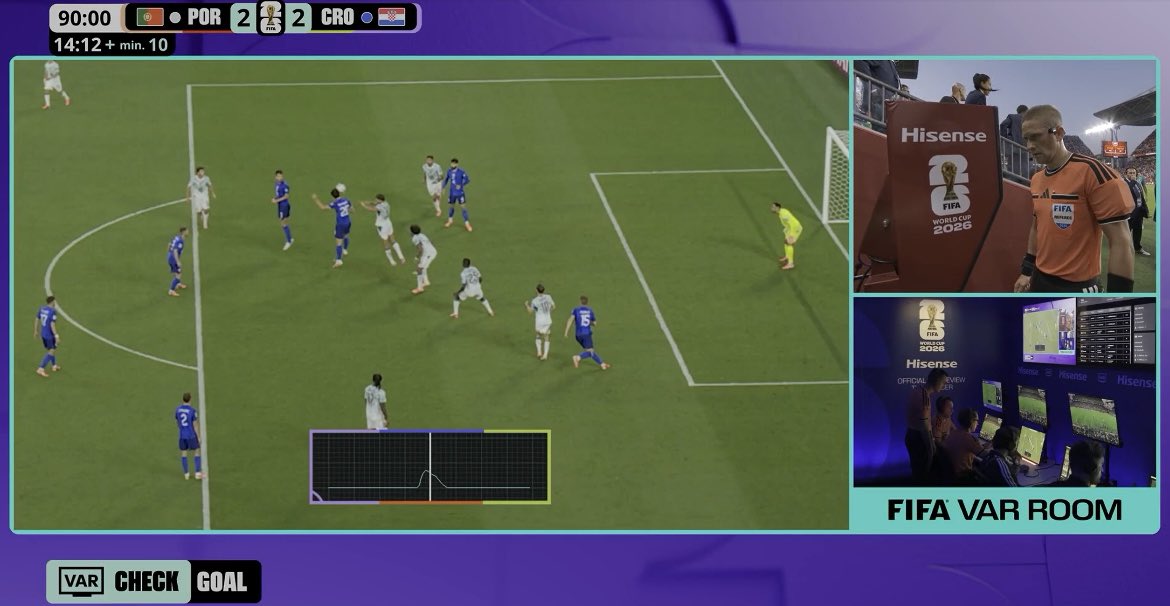
FIFA has defended the decision to disallow Croatia’s dramatic late equaliser against Portugal, saying Connected Ball Technology confirmed a crucial touch in the build-up that resulted in an offside offence. In a statement issued after the match, FIFA said data from the Adidas Tr…
FIFA has defended the decision to disallow Croatia’s dramatic late equaliser against Portugal, saying Connected Ball Technology confirmed a crucial touch in the build-up that resulted in an offside offence. In a statement issued after the match, FIFA said data from the Adidas Trionda official match ball showed that Croatia’s Igor Matanović made contact with the ball before it reached the goalscorer. According to FIFA, that touch meant the receiving player was in an offside position, allowing the referee and VAR to correctly rule out the goal. FIFA said the Trionda ball is equipped with Inertial Measurement Unit (IMU) sensors that can detect even the slightest contact with the ball. The data is displayed during broadcasts as a “heartbeat graphic” and provides match officials with precise information to support quick and accurate decisions. The explanation came after the disallowed goal sparked debate among fans and pundits, with many questioning whether the ball had been touched before reaching the scorer. FIFA said the connected ball data confirmed the contact and supported the officials’ decision to disallow the goal for offside. (Newswire)
A closer look at why Croatia’s late equaliser against Portugal in their World Cup Round of 32 was disallowed pic.twitter.com/DVK6yeOqF7 — Sky Sports News (@SkySportsNews) July 3, 2026