

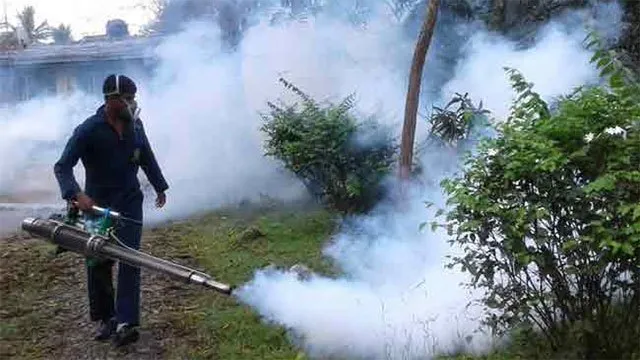
The fogging carried out to control the spread of dengue mosquitoes is not an effective standalone solution and can also cause environmental damage, the Health Entomology Officers' Association said.Speaking at a media briefing in Colombo today (28), the President of the Associati…
The fogging carried out to control the spread of dengue mosquitoes is not an effective standalone solution and can also cause environmental damage, the Health Entomology Officers' Association said.Speaking at a media briefing in Colombo today (28), the President of the Association, Najith Sumanasena said that although fogging is conducted by Medical Officer of Health (MOH) offices in response to spike in dengue cases, it should not be viewed as the only method of controlling the disease.He explained that mosquitoes have four stages in their life cycle; egg, larva, pupa, and adult but fogging only kills adult mosquitoes, leaving the other stages unaffected.Sumanasena further noted that a single round of fogging costs more than Rs. 20,000 and that the insecticides used not only kill mosquitoes but also beneficial insects such as bees and dragonflies, which play an important role in pollination and maintaining the ecosystem.He stressed that fogging is carried out only when scientifically justified and in locations where it is deemed absolutely necessary.The Association also warned that repeated use of insecticides can lead to insecticide resistance, reducing the effectiveness of mosquito control efforts over time.Sumanasena pointed out that Sri Lanka has previously had to replace several insecticides used in malaria control, including DDT, Malathion, Solfac and Icon, due to the development of resistance.He added that excessive use of insecticides may also pose health risks to people, depending on their medical conditions and therefore should not be considered a long-term solution for mosquito control.Meanwhile, the National Dengue Control Unit reported that the number of dengue-related deaths this year has risen to 31.As of yesterday, a total of 52,068 dengue cases had been reported across the island, according to the Unit.