

The cost of printing excise security labels on liquor bottles has not been reduced despite most manufacturers now using digitally printed labels instead of physical stickers, it was revealed at the Parliamentary Committee on Public Finance (COPF).During the committee proceedings…
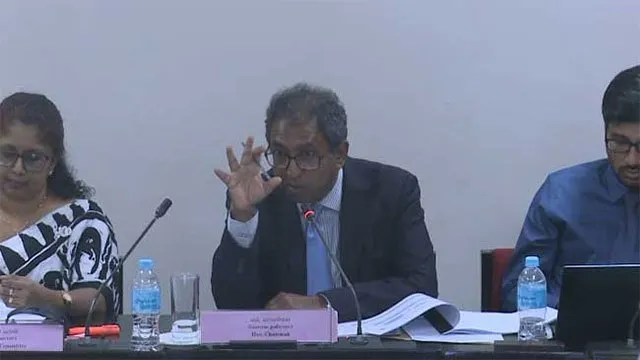
The cost of printing excise security labels on liquor bottles has not been reduced despite most manufacturers now using digitally printed labels instead of physical stickers, it was revealed at the Parliamentary Committee on Public Finance (COPF).During the committee proceedings, officials disclosed that two local liquor and beer manufacturers are unable to use the physical security stickers on their bottles due to production-related constraints. As a result, the security marking is printed directly onto the bottles as a digital label.Committee Chairperson Harsha de Silva questioned Excise Department officials over the continued payment of the same fee for digitally printed labels despite the absence of physical stickers.Responding to the committee, Deputy Commissioner General of Excise M. Jayantha Silva said the security label system was introduced in 2022 and that the current contract with the supplier will expire on January 2, 2027, with a fresh tender process already underway.He explained that the supplier prints and supplies the security stickers, while liquor manufacturers are responsible for affixing them to bottles. According to him, “the cost is USD 5.99 per 1,000 stickers, with the total increasing to USD 7.99 per 1,000 after including port and customs charges.”However, he noted that more than 80% of locally produced liquor bottles now carry digitally printed security labels rather than physical stickers, as one manufacturer operates at high production speeds while another uses a cooling process that leaves moisture on bottles, making paper stickers unsuitable.Questioning the arrangement, Harsha de Silva pointed out that digitally printed labels eliminate the need for physical stickers and the application process, and therefore should cost significantly less.Despite this, Deputy Commissioner General Jayantha Silva acknowledged that the same USD 7.99 per 1,000 is still being paid for digitally printed labels because the amount had been stipulated in the existing tender agreement.He further stated that although the actual cost of digital printing is lower, payments continue to be made to the contractor at the agreed tender rate under the current contract.