

Preliminary investigations had indicated that the deadly violence at Negombo Prison was triggered by an attack on inmates suspected of providing information to prison authorities to prevent the smuggling of drugs and other contraband into the facility, Minister of Justice and Na…
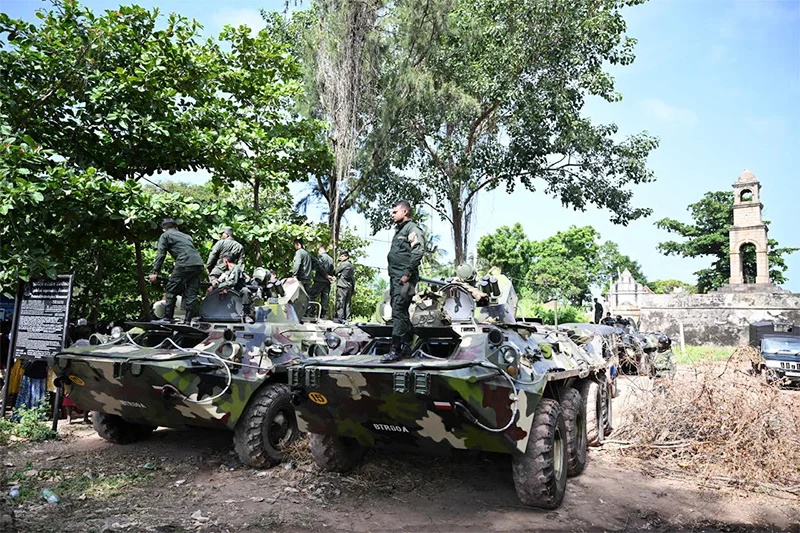
Preliminary investigations had indicated that the deadly violence at Negombo Prison was triggered by an attack on inmates suspected of providing information to prison authorities to prevent the smuggling of drugs and other contraband into the facility, Minister of Justice and National Integration Harshana Nanayakkara told Parliament yesterday (7). Making a ministerial statement on the July 5-6 Prison unrest, the Minister stressed that investigations were still underway and that no final conclusions had been reached. However, preliminary findings suggested that the violence had originated from a clash between two rival inmate groups linked to the illegal drug trade. The Minister said Prison authorities believed that a possible motive for the attack was that certain inmates had provided information to officials to prevent narcotics and other prohibited items from being smuggled into the Prison. Those inmates were frequently targeted by organised criminal groups, he said. Nanayakkara said that these were only preliminary findings, based on information currently available, and that the final conclusions would depend on ongoing investigations and the report of the Committee appointed to probe the incident. The initial clash broke out on July 5 between two groups of inmates, leaving two prisoners dead and 35 others injured. Order was restored later that evening, but violence erupted again the following morning while inmates were being prepared for court appearances, after breakfast. Troops atop armoured personnel carriers deployed outside the Negombo Prison (picture by Nishan S. Priyantha) According to the Minister, a small organised group deliberately destroyed the CCTV cameras, and a body scanner, during the unrest, apparently in an attempt to disable security systems used to prevent narcotics and other contraband from entering the Prison. He said not all inmates had taken part in the violence and that many innocent prisoners were among those injured. Nanayakkara said unarmed prison officers, who intervened to contain the violence, came under attack, with several officers being killed while attempting to protect their colleagues. Two unarmed officers were initially assaulted, prompting others to rush to their rescue. Most of the prison officers, who lost their lives, were brutally attacked with bricks and iron poles, he added. The Minister said the rioting inmates had managed to obtain weapons and break through an iron gate before emerging from the Prison compound. Had they succeeded in escaping, they could have posed a serious threat to public safety, he warned. Investigations were continuing to determine how the inmates obtained the weapons, including whether they had broken into the Prison armoury or seized them from prison officers during the unrest. Nanayakkara said postmortem examinations were being conducted to determine whether the deaths had been caused by gunfire or assaults by fellow inmates. He said 734 inmates involved in the unrest had been transferred to other prisons following the incident. “As of now seven prison officers and 19 inmates lost their lives and 23 prison officers and 54 inmates are being treated in hospitals for injuries,” the Minister said. The CID has launched a separate investigation in addition to the internal inquiry being conducted by the Department of Prisons. The Minister said the government had not underestimated the gravity of the incident at any stage and that every effort was being made to establish the full circumstances surrounding the violence.
By Saman Indrajith