

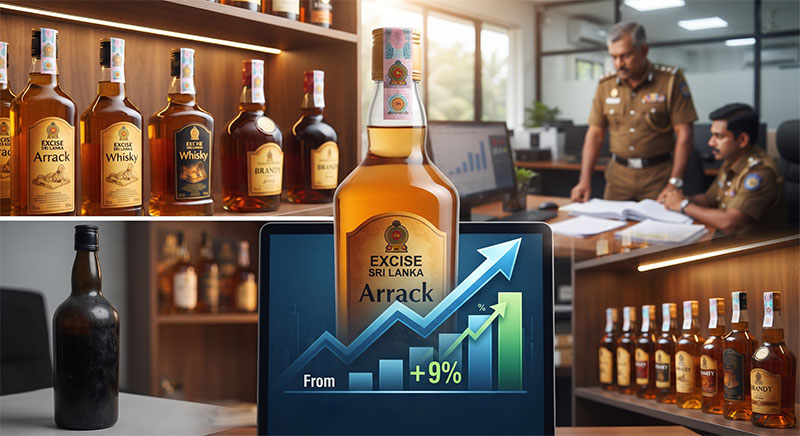
Sri Lanka’s excise revenue has surged by more than 60% over the past three years following the introduction of a revenue sticker system for liquor products, which authorities say has helped curb widespread tax evasion and counterfeit operations without costing the government a s…
Sri Lanka’s excise revenue has surged by more than 60% over the past three years following the introduction of a revenue sticker system for liquor products, which authorities say has helped curb widespread tax evasion and counterfeit operations without costing the government a single rupee. The Excise Department’s revenue increased from Rs. 170 billion in 2022, when the programme was launched, to Rs. 226 billion in 2024, with further growth recorded in 2025, according to a senior department official. The revenue stickers programme, introduced on January 3, 2022, initially faced strong resistance from sections of the liquor industry. The official said many manufacturers had failed to comply with the requirement to affix revenue stickers to bottles, resulting in significant revenue losses to the state. “Nearly 50% of the excise revenue due to the government was being lost,” the official said, adding that the department responded through intensified inspections and enforcement operations. The official claimed that some industry players had opposed the system because it disrupted practices involving counterfeit stickers, unrecorded production and tax evasion. In one series of raids conducted in August 2023, counterfeit stickers were detected on liquor bottles at more than 6,000 locations, while around 100,000 bottles bearing fake stickers were seized within a week in February 2023. Under the revenue stickers system, the financial burden is borne entirely by liquor manufacturers. The department said suppliers provide the stamps at a cost of about US$5.99 per 1,000 stickers, rising to approximately US$7.99 after port duties and clearing charges. The cost to manufacturers is around Rs. 1.21 per stamp. The official said the programme produced immediate results, with excise revenue increasing by 17.7% in the first quarter after implementation, while liquor production rose by 9%. Toddy production recorded a sharp 200% increase as previously unreported production entered the formal taxable supply chain. By May 31, 2025, the department had achieved 104% of its expected revenue target, collecting Rs. 98 billion during the period, the official said. The Excise Department said the system conforms to international standards, including ISO 22382 guidelines for revenue sticker systems, and similar mechanisms are used in countries such as Nepal and Argentina. by Chaminda Silva