

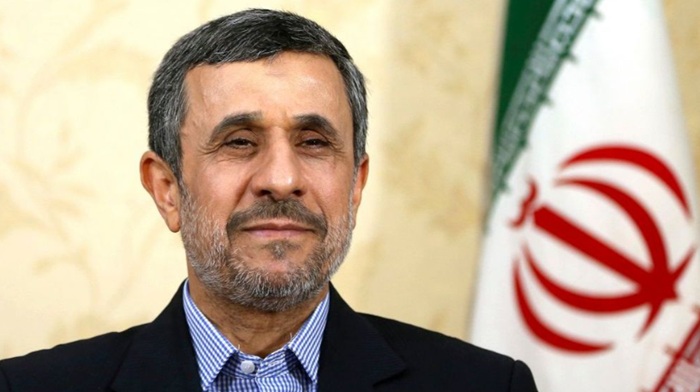
Former Iranian president Mahmoud Ahmadinejad has forcefully denied explosive claims that Israel’s intelligence agency Mossad attempted to recruit him as part of an alleged plot to topple Iran’s leadership, dismissing the reports as “Hollywood-style” fabrications. In a statement…
Former Iranian president Mahmoud Ahmadinejad has forcefully denied explosive claims that Israel’s intelligence agency Mossad attempted to recruit him as part of an alleged plot to topple Iran’s leadership, dismissing the reports as “Hollywood-style” fabrications. In a statement issued on Monday (July 13), Ahmadinejad’s office rejected reports that he had been secretly approached by Mossad, offered support to become Iran’s future leader, and later placed under house arrest after the alleged operation failed. The office said the allegations, published by The New York Times, “did not merit a denial”, describing the newspaper as one that is “known for publishing fake news and fabricating lies.” It also accused the US daily of being willing to publish “fabricated articles and reports in exchange for payment”, while insisting that Ahmadinejad remained politically active and was continuing his daily work. The denial came after The New York Times, citing American and Iranian officials familiar with the matter, reported that Mossad had spent years attempting to cultivate ties with Ahmadinejad as part of a broader regime change strategy. Israel spent years cultivating former Iranian president Mahmoud Ahmadinejad as part of a failed plan to install him as Iran’s new leader during this year’s war, the New York Times reported, citing American, Israeli and Iranian officials familiar with the operation. According to the report, the yearslong effort to groom the former Iranian president as an intelligence asset culminated in a dramatic effort to take him to a Mossad safe house in Iran in the early days of the war. But the plan fell apart. In early 2024, the rector of a university in Budapest received a startling request from a top Hungarian government official. The official told the rector, Professor Gergely Deli, that Ludovika University of Public Service should hold a climate change conference and extend an invitation to an unlikely guest: Mahmoud Ahmadinejad, the widely reviled former president of Iran. Even more shocking was the reason. The official told Mr. Deli that the conference was merely a front for Mr. Ahmadinejad to have secret discussions in Budapest with intelligence operatives from Israel, Mr. Ahmadinejad’s avowed enemy. Mr. Deli knew that the invitation could tarnish both his own reputation and that of the university. But, he said in an interview, he believed he might be playing a role in saving lives. “You have two enemies, and if these enemies want to talk with each other, then it’s best to do what you can to make them talk,” he said. Mr. Ahmadinejad’s 2024 visit to the university and a second one the following year were part of a yearslong Israeli effort to groom him as an intelligence asset who, when the time came, could be installed as Iran’s new leader, according to both American and Iranian officials familiar with the operation, who spoke on the condition of anonymity to describe sensitive intelligence. Recruiting Mr. Ahmadinejad was of such priority for Israel that the country’s then-spy chief David Barnea even traveled to the Hungarian capital in 2024 to meet with Mr. Ahmadinejad personally, according to former American officials. Soon afterward, they said, Mossad, Israel’s foreign intelligence service, notified the C.I.A. that it had been in contact with Mr. Ahmadinejad. Israel’s decision to build a regime-change plan around Mr. Ahmadinejad is an extraordinary twist in the saga of the country’s relations with the former president, who was known for accelerating Iran’s nuclear program, calling regularly for the destruction of Israel and denying the Holocaust. In recent years, according to American officials, Israel secretly paid money to Mr. Ahmadinejad for housing and travel, and Israeli operatives met him abroad on several occasions, including during his trips to Budapest. The effort culminated in late February of this year — during the first days of the U.S.-Israeli war on Iran — with an audacious operation to relocate the former leader, who had been living under strict surveillance in Tehran. The goal: to set in motion the plan to topple the current regime and install Mr. Ahmadinejad. The plan failed. On Feb. 28, an Israeli airstrike hit Mr. Ahmadinejad’s compound, targeting the building of his bodyguards and his armored vehicle. After the strike, according to four senior Iranian officials, a black Peugeot car arrived, picked up Mr. Ahmadinejad and whisked him away at high speed from the chaotic scene. American and Iranian officials with knowledge of the operation said the car had been driven by Mossad operatives, who took Mr. Ahmadinejad to a secret safe house in Iran. But the former Iranian leader was upset about the frantic rescue operation, and he appeared to be disillusioned about the Israeli plan to return him to power, according to people with knowledge of what occurred. He eventually left the safe house under circumstances that are still unclear. Mr. Ahmadinejad was not seen in public again until last Monday, when he made a brief appearance at the funeral procession for the slain supreme leader Ayatollah Ali Khamenei. His current status remains uncertain. But four senior Iranian officials said that Mr. Ahmadinejad was in the custody of the Islamic Revolutionary Guard Corps’ intelligence wing, under house arrest now that Iran has learned about much of his interactions with Israel. Israeli officials have not commented publicly about the plan to install Mr. Ahmadinejad as Iran’s leader, which was part of a broader attempt to topple the government in Tehran. Another element involved arming and training Iranian Kurdish opposition forces based in northern Iraq to cross into western Iran, hold territory there and eventually move toward the capital Tehran, an effort that never manifested. The regime-change plan involved a “sequence of special operations, very, very unique, that was supposed to happen,” Tamir Hayman, a former head of intelligence for the Israeli Defense Forces, told the PBS talk show “Firing Line” in May, after The New York Times first revealed details of Mr. Ahmadinejad’s role in the plan. “And Ahmadinejad was part of that sequence.” Mossad officials did not respond to requests for comment. Ali Akbar Javanfekr, a spokesman for Mr. Ahmadinejad, declined to comment.