

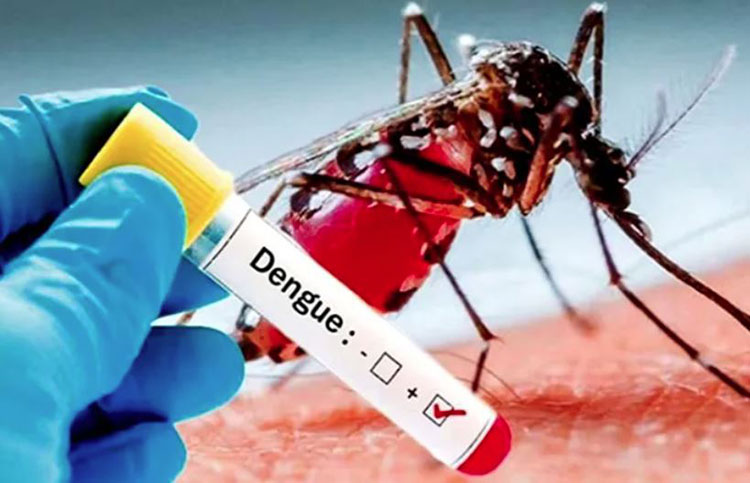
Mosquito larvae density in Sri Lanka’s Western Province has increased significantly, making the next two weeks an extremely high-risk period for dengue transmission, according to Consultant Physician Dr. Ananda Wijewickrama, a member of the Expert Committee on Dengue Management.…
Mosquito larvae density in Sri Lanka’s Western Province has increased significantly, making the next two weeks an extremely high-risk period for dengue transmission, according to Consultant Physician Dr. Ananda Wijewickrama, a member of the Expert Committee on Dengue Management. Speaking during a television programme, Dr. Wijewickrama warned that based on the current trend of dengue transmission, the situation could become more serious than the country’s 2017 dengue outbreak. He said hospitals in the Western Province have already exceeded their capacity due to the sharp increase in patient admissions, with some facilities being forced to accommodate two or even three patients in a single hospital bed. Also speaking during the programme, Prof. Neelika Malavige of the University of Sri Jayewardenepura said early signs of the current outbreak had been visible as far back as December and January. “We could already see indications of this in December and January. With the current changes, the trend is not encouraging. We usually see an increase in dengue cases during the Southwest Monsoon period from May to July, and again during the Northeast Monsoon from November to January. When such conditions are expected, we need to be prepared in advance. After that, from February to April, we experienced extremely high temperatures, and mosquito breeding tends to slow down during periods of excessive heat,” she said. Professor Malavige also noted that three dengue vaccines have been approved in various countries and are currently being used in several Asian nations, including Indonesia, the Philippines, Thailand, Vietnam and Malaysia. “However, there are many factors Sri Lanka would need to consider before introducing a dengue vaccine. It would not have an immediate impact on reducing an epidemic. The vaccine requires two doses, and it takes time for immunity to develop after vaccination. However, for people who have previously been infected with dengue, the vaccine has shown very good effectiveness,” she said. Sri Lanka has so far reported 66,064 dengue cases this year, while the death toll has risen to 46. A total of 10,685 cases were reported during the first nine days of July alone, including 1,030 new infections reported yesterday. Of the total number of cases, 52.7% have been reported from the Western Province. Gampaha District has now overtaken Colombo District as the area recording the highest number of dengue infections. Meanwhile, amid the heightened risk, special dengue control operations involving members of the armed forces were carried out today in several parts of the country.
by Pradeep Prasanna Samarakoon