

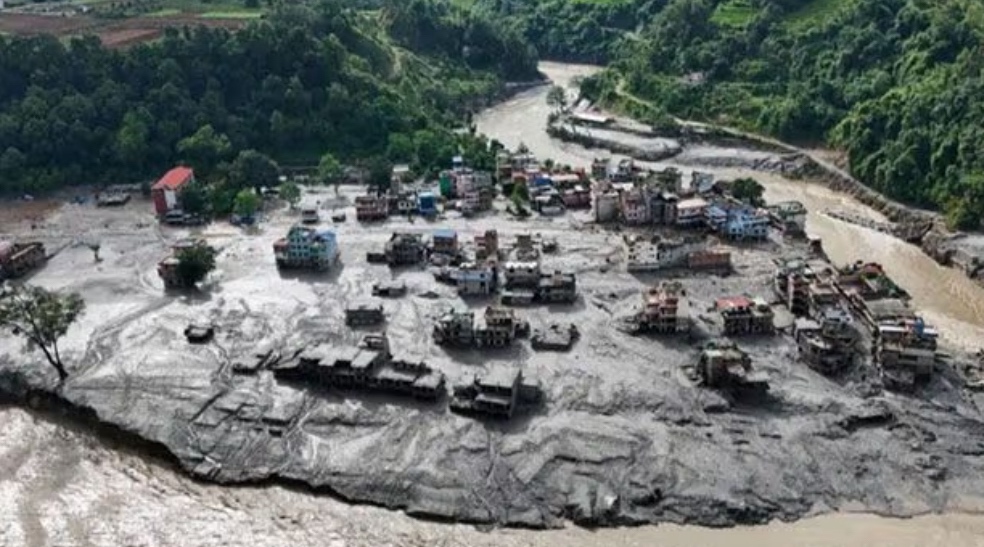
A glacial collapse at the Nepal-Tibet border triggered catastrophic floods and landslides that have claimed at least 392 lives, with more than 1,400 people unaccounted for, including foreign tourists and Hindu pilgrims.
A glacial collapse at the Nepal-Tibet border has unleashed devastating floods and landslides, killing at least 392 people and leaving over 1,400 missing. According to the US Geological Survey, the disaster was triggered by the collapse of a glacier that generated a massive debris flow, initially mistaken for a magnitude 4.4 earthquake. The torrent of freezing water, mud, and ice travelled nearly 170 kilometres south into Nepal, with survivors describing it as an "inland tsunami" that obliterated entire settlements.
The majority of missing persons are foreign nationals, with Indian citizens comprising the largest contingent. The United States reported 90 citizens out of contact, while China said 100 Chinese citizens are missing in Nepal. Additionally, China's state media reported three dead and 558 missing, including 260 foreigners, at the Gyirong Port in Tibet. Other nationalities affected include Australians, British, Malaysian, Dutch, Portuguese, South African, and South Korean citizens. Many of the missing are trekkers and Hindu pilgrims who were returning from pilgrimages to Mount Kailash when caught in the disaster.
Rescue operations remain ongoing, with Nepali soldiers deploying sniffer dogs to locate bodies buried beneath debris. Nepali police have recovered 389 bodies so far. Prime Minister Balendra Shah has toured affected areas and directed local authorities to provide immediate relief and clear blocked roads. Authorities warn of a secondary threat, as water trapped behind debris blockages upstream could trigger additional flooding, prompting the Kathmandu Flood Forecasting Division to issue special warnings.
Experts link the disaster to climate change, which accelerates glacial melting worldwide and increases the risk of glacial lake outburst floods. International assistance has begun mobilising, with China deploying nearly 800 emergency workers, sniffer dogs, and speedboats for relief efforts.



-852731_850x460.jpg)