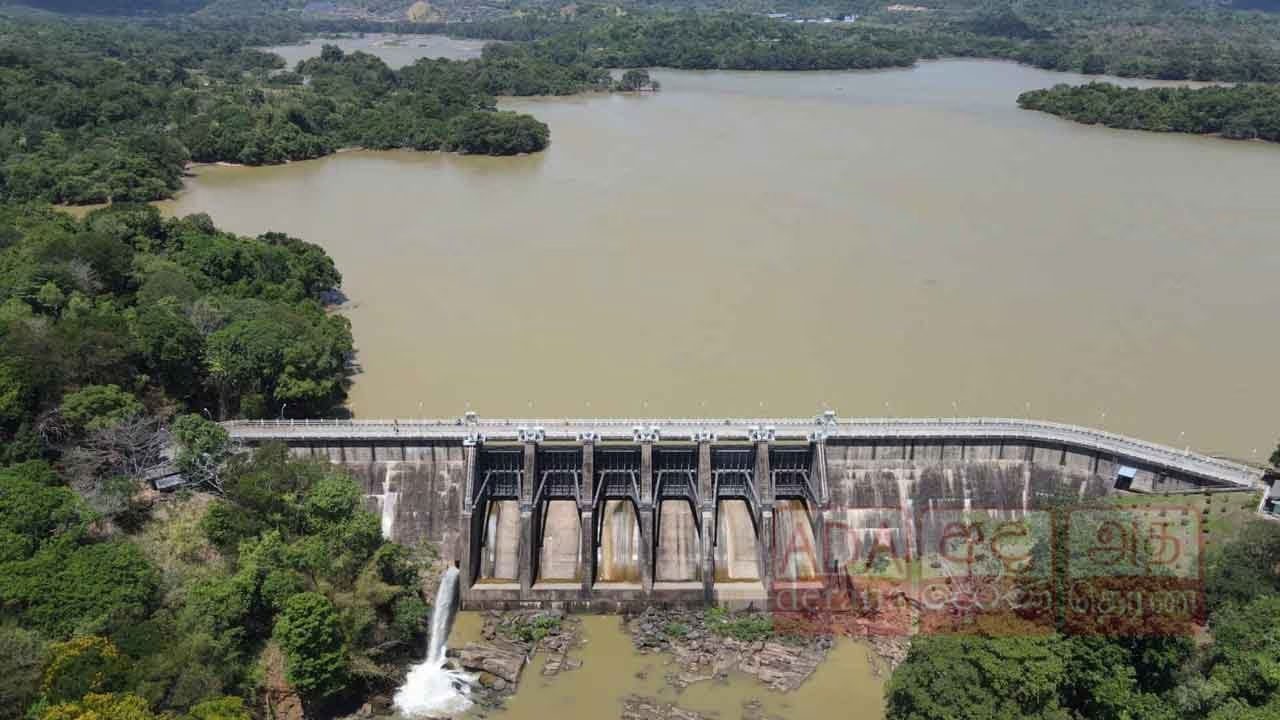
Authorities will completely drain the Bowatenna Reservoir from August 24 for its first comprehensive maintenance since construction, addressing severe sedimentation that has reduced its storage capacity by more than half over five decades.
The Bowatenna Reservoir, which supplies water to the Kala Wewa basin, will be emptied beginning August 24 to permit extensive repair and maintenance operations scheduled to last approximately three weeks. According to Reservoir Engineer Buddhika Mahesh Nawaratne, this represents the first full-scale maintenance undertaken since the reservoir's construction around 50 years ago.
Significant sediment accumulation has substantially compromised the reservoir's functionality. Originally designed to hold approximately 56 million cubic metres of water, a 2014 survey revealed the capacity had declined to roughly 23 million cubic metres. Sediment has also collected in the water supply tunnel to Kala Wewa and near the power generation facility, restricting the discharge of the required 1,000 cubic feet of water per second to the basin. The maintenance programme has been scheduled during current dry weather conditions, with the reservoir's water level already reduced to an estimated 11 million cubic metres.
Authorities have implemented measures to preserve water supply during the maintenance period. Water currently stored in the reservoir has been transferred to the Kandalama, Kala Wewa and Ibbankatuwa reservoirs, while the Mahaweli Authority will maintain a continuous 1,000 cubic feet per second flow through the Polgolla Dam and related waterways to protect the aquatic ecosystem. The maintenance work, supervised by the Mahaweli Authority and estimated to cost around Rs. 4 million, is expected to conclude by September 14, when refilling will commence using water reserved at the Kotmale Reservoir.
Reservoir Engineer Nawaratne has cautioned the public against entering the drained reservoir bed, citing safety hazards from accumulated sediment. Upon completion, the reservoir is anticipated to regain increased storage capacity and improve water delivery efficiency to the Kala Wewa basin.







-848360-851651_850x460.jpg)