

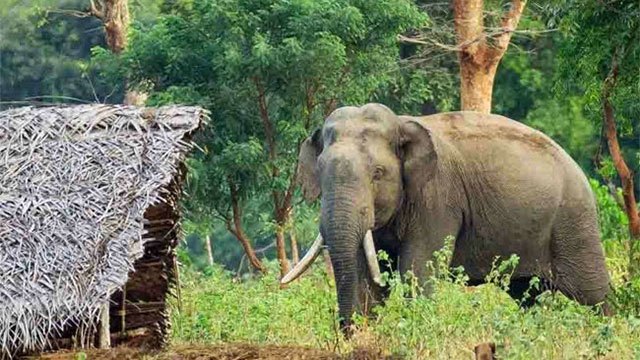
China has committed to providing technical and research assistance for a bamboo-based barrier project designed to reduce human-elephant conflicts in Sri Lanka, with potential economic benefits for local communities.
A Sri Lankan delegation led by Deputy Environment Minister Anton Jayakody has secured a commitment from China to support the development of bamboo bio-fences as a strategy to address the country's persistent human-elephant conflict. The agreement was reached during official talks at an international bamboo research institution in Beijing, where discussions covered cultivation methods, processing technologies, and bamboo-based industrial applications.
Under the initiative, China has pledged to offer modern technology, technical expertise, research and development support, and established best practices to help Sri Lanka establish the bamboo barrier system. The bio-fences are intended to serve as a sustainable, environmentally friendly method of reducing conflicts between human settlements and wild elephant populations in affected areas.
Beyond wildlife management, Sri Lankan officials view the project as an opportunity to generate economic benefits for rural communities through the development of bamboo-related industries. The Environment Ministry has indicated that the bamboo bio-fence initiative aligns with the government's broader environmental and development objectives, potentially contributing to green economy goals while tackling one of Sri Lanka's major conservation challenges.




-848812_850x460.jpg)