
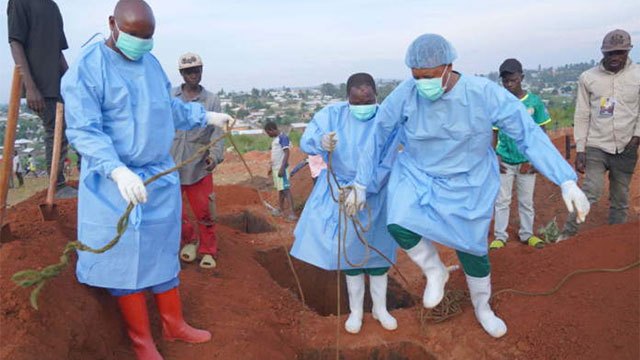
The Democratic Republic of Congo is battling its largest Ebola epidemic on record, with deaths surpassing 2,500 in an outbreak affecting an area larger than France. UN officials warn the virus is spreading faster than response efforts can contain it.
The Democratic Republic of Congo faces an unprecedented health crisis as its seventeenth Ebola epidemic has become the deadliest in the nation's history. According to the UN's senior Ebola coordinator Julien Harneis, the outbreak has claimed more than 2,500 lives and is expanding exponentially across a vast geographical area. The current epidemic surpassed the previous record set during the 2018-2020 outbreak in terms of case numbers by late July, marking a significant escalation in the public health emergency.
The disease, caused by the Bundibugyo species of Ebola virus, presents particular challenges as no approved vaccines or treatments currently exist for this variant. Harneis emphasized that the spread is outpacing containment efforts, particularly given the region's decades-long conflict and the resulting humanitarian vulnerabilities. The outbreak spans territory larger than France, complicating efforts to reach affected populations and deliver medical assistance.
Healthcare workers bear significant risks in battling the epidemic. More than 160 health workers have contracted Ebola, resulting in 43 deaths among medical personnel. Beyond the biological threat, frontline workers face physical attacks and hostility from communities. Harneis reported over 260 assaults on health workers in the past six months, resulting in eight deaths. These attacks include stone-throwing at ambulances and facilities, partly driven by local misconceptions about the outbreak's nature and fears surrounding disease prevention measures that restrict traditional burial practices.
Funding shortages compound the crisis. The UN coordinator warned that existing financial resources will be exhausted within weeks, while logistical barriers—including halted commercial flights that disrupted banking services—have complicated payment of the tens of thousands of personnel engaged in response efforts. These systemic obstacles threaten to further undermine containment and humanitarian response capacity at a critical juncture.