

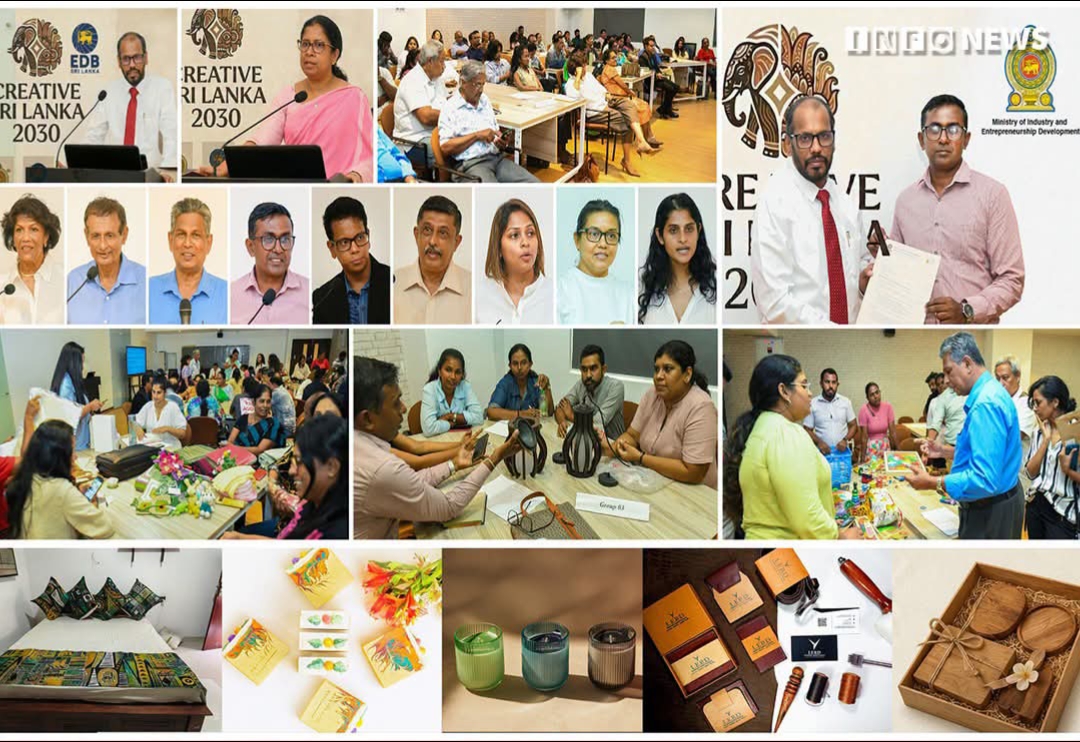
The Export Development Board has begun the second phase of its Creative Sri Lanka 2030 programme, aimed at connecting local artisans and craft businesses with international markets as part of broader export growth targets.
The Export Development Board has initiated the second phase of Creative Sri Lanka 2030, a national programme designed to enhance the international market presence of Sri Lankan creative industries and handicraft producers. The initiative brings together various stakeholders including exporters, small and medium-sized enterprises, artisans, designers, and academic institutions to develop traditional Sri Lankan crafts for global consumption.
Sri Lankan artisans have long worked with traditional materials including clay, wood, fibre, metal and textiles to produce goods reflecting the nation's cultural heritage. Despite these established capabilities, much of this creative work has remained confined to small-scale operations with limited access to international trade networks. The Creative Sri Lanka 2030 programme seeks to address this gap by providing design support, structured training and international market connections.
The initiative forms part of Sri Lanka's broader National Export Development Plan 2026-2030, which sets an ambitious target of US$36 billion in total exports by 2030. This overarching plan emphasizes export diversification, value addition and deeper integration into global supply chains. By strengthening the creative and handicraft sector's global competitiveness, the programme aims to generate new income opportunities for local businesses and artisans while establishing the country's craft industries as a more significant contributor to export revenues.