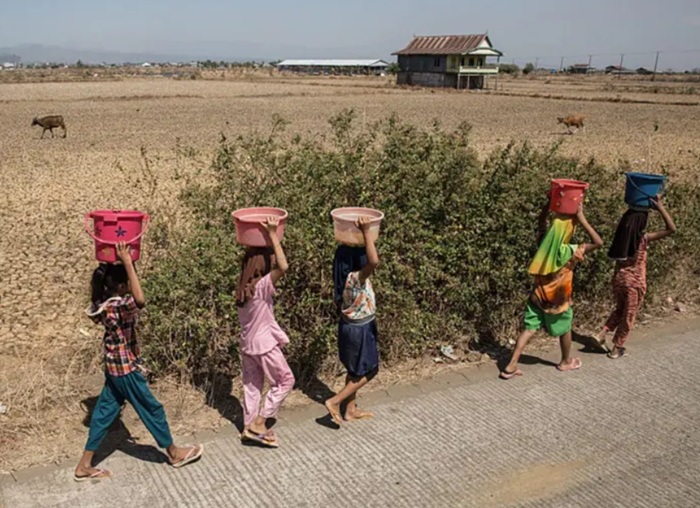
Britain's meteorological authority has forecast an exceptionally strong El Niño pattern developing across the Pacific Ocean, potentially making 2027 the hottest year on record and bringing significant weather disruptions worldwide.
The UK Met Office has issued a warning about an developing El Niño event in the Pacific Ocean that officials describe as likely the strongest in living memory. According to the forecaster, current sea surface temperature anomalies in the equatorial Pacific exceed 2 degrees Celsius above normal, with projections suggesting they could surpass 3 degrees Celsius as the phenomenon peaks later this year. This would represent an unprecedented measurement in records dating back to 1950 and potentially the most intense El Niño event since the 19th century.
El Niño is a naturally occurring climate pattern that typically emerges every two to seven years, lasting approximately nine to twelve months. The phenomenon occurs when trade winds weaken, allowing warm ocean water to spread eastward across the Pacific, releasing heat into the atmosphere and altering global rainfall patterns. Scientists formally declare an El Niño when sea surface temperatures in a key Pacific region measure at least 0.5 degrees Celsius above average. The current event's intensity is noteworthy because typical El Niño events cause temperature rises of 1 to 2 degrees Celsius, with 2 degrees considered a major event.
The Met Office has stated that 2027 is "very likely" to become the warmest year on record, potentially replacing 2024. Global weather patterns are already being affected, with India experiencing below-average monsoon rainfall and suppressed hurricane activity reported in the Atlantic Ocean. The UK may face increased risks of wet, stormy autumn conditions. Some climate research groups have projected even more extreme scenarios, with temperature anomalies potentially reaching 4 degrees Celsius, though such extreme projections remain uncertain. The United Nations Food and Agriculture Organization has warned that the event could threaten tens of millions of people in vulnerable regions with food insecurity.