

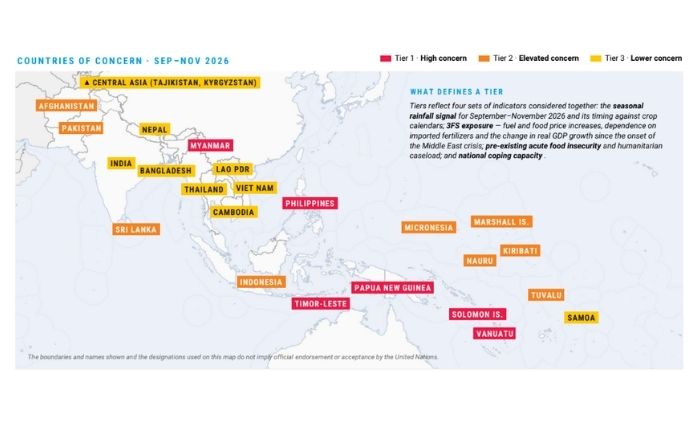
A UN assessment has identified Sri Lanka as facing elevated risks from stronger El Niño patterns, rising input costs, and potential heavy rainfall during the upcoming Maha farming season.
Sri Lanka has been singled out as a country of concern in a new Asia-Pacific assessment by United Nations agencies, which warns of converging threats to the nation's food production and climate stability. The report highlights the possibility of above-average rainfall beginning in October as the Second Inter-Monsoon season approaches, coinciding with the critical Maha cultivation period.
While additional precipitation could provide some benefit by refilling water reservoirs, the assessment cautions that excessive rainfall during the planting phase poses serious agricultural challenges. The UN agencies warn that heavy downpours risk causing flooding and waterlogging, which could delay planting activities and disrupt normal farming operations across the country.
Beyond weather concerns, the report emphasizes that elevated commodity costs compound the vulnerability of Sri Lanka's food system. Fuel and fertilizer prices remain significantly elevated compared to pre-crisis levels, with diesel approximately 44% higher and petrol around 41% above historical benchmarks. The nation's dependence on imported fertilizers and wheat from international markets further exposes domestic food production to external price fluctuations.
The assessment was produced collaboratively by the Food and Agriculture Organization, World Food Programme, UN Women, World Meteorological Organization, and UN humanitarian agencies. The findings underscore the interconnected nature of climate, economic, and agricultural challenges facing Sri Lanka during a critical growing season.