

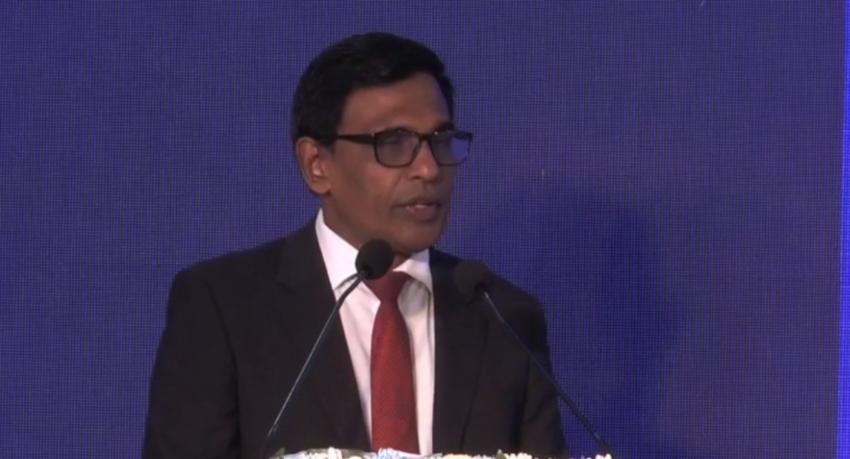
Public Security Minister Ananda Wijepala has outlined a new approach to combating organised crime in Sri Lanka, emphasising the need for technologically advanced policing that targets criminal financial networks rather than relying solely on traditional arrests.
Public Security and Parliamentary Affairs Minister Ananda Wijepala has called for a fundamental shift in how Sri Lankan law enforcement tackles organised crime, moving beyond conventional investigation methods to focus on tracing and disrupting illicit financial flows. Speaking at a law enforcement forum, Wijepala argued that modern policing requires officers who are technologically proficient, analytically skilled and adaptable to evolving criminal trends, from cybercrime to financial offences and transnational organised crime.
Wijepala emphasised that financial crime represents one of the most pressing challenges facing law enforcement agencies. He stressed that illicit funds serve as the primary engine driving organised criminal enterprises, declaring that "money is the lifeblood of organised crime." Rather than focusing exclusively on apprehending offenders, authorities must increasingly target the financial networks sustaining criminal operations, he said.
The minister outlined the importance of collaboration among multiple stakeholders, including law enforcement agencies, financial intelligence units, financial institutions and prosecutors, to effectively combat money laundering and financial offences. He also highlighted the critical need for regional cooperation across South Asia, noting that countries in the region are interconnected through trade, tourism, migration and digital networks—connections that criminal organisations exploit for drug trafficking, human trafficking and cybercrime. Wijepala called for enhanced intelligence-sharing mechanisms, improved mutual legal assistance frameworks and increased joint training opportunities among regional law enforcement agencies to address the transnational nature of modern organised crime.