

The prison violence in Negombo has become the first major crisis to confront the government since it came to power. The government may or may not be responsible for creating the conditions that have accumulated over decades and made the prison system a powder keg. The fact is th…
The prison violence in Negombo has become the first major crisis to confront the government since it came to power. The government may or may not be responsible for creating the conditions that have accumulated over decades and made the prison system a powder keg. The fact is the government’s Ratama Ekata anti-drug crackdown boosted the countrywide prison population from 28,000, in late 2024, to 41,000, in 2026. The conditions of imprisonment include chronic overcrowding, poor infrastructure, inadequate staffing, the penetration of organised crime and drug networks into prisons, and the long neglect of prison reform by successive governments. The Negombo Prison was housing approximately 2,600 inmates at the time of the clashes although it was built for only about 650. By the time order was restored, 29 people, including seven prison officers, had lost their lives and more than 100 others had been injured. Justice Minister Harshana Nanayakkara accepted responsibility before Parliament, visited the Prison and announced immediate measures, including legislative changes to facilitate bail and alternatives to remanding prisoners. The NPP government needs to accept responsibility for its failure to anticipate the danger, to respond with sufficient speed and competence once the problem had erupted. A dangerous situation can be observed countrywide with more than 42,000 prisoners being held in prisons designed to accommodate about 10,000 inmates. The magnitude of the Negombo Prison tragedy needs to be understood not merely as an isolated incident but as a warning that the government cannot postpone structural reforms indefinitely. A government elected on the promise of changing the system cannot justify repeating the failures of its predecessors on the basis that it is sincere and uncorrupt unlike them. The failure to move beyond promises has become evident in several other sectors as well. Farmers continue to agitate over unresolved problems. Plantation workers continue to seek meaningful integration into national life. Many of them, who were victims of Cyclone Ditwah, continue to live in miserable conditions due to the government’s slowness in dealing with their problems of their lack of ownership of lands and homes. The Mylathamadu cattle farmers of Batticaloa have issues once again even after two presidents, President Ranil Wickremesinghe and now President Anura Kumara Dissanayake ordered evacuation of intruders in terms of court orders. But the local police and the Mahaweli Authority officials seem slow to take any actions, even to the extent of not complying with judicial decisions. Victims of past human rights violations and thousands of families of missing persons are still waiting for justice. The promised repeal of the Prevention of Terrorism Act has yet to materialise. Prison reform has now joined this growing list of deferred commitments.
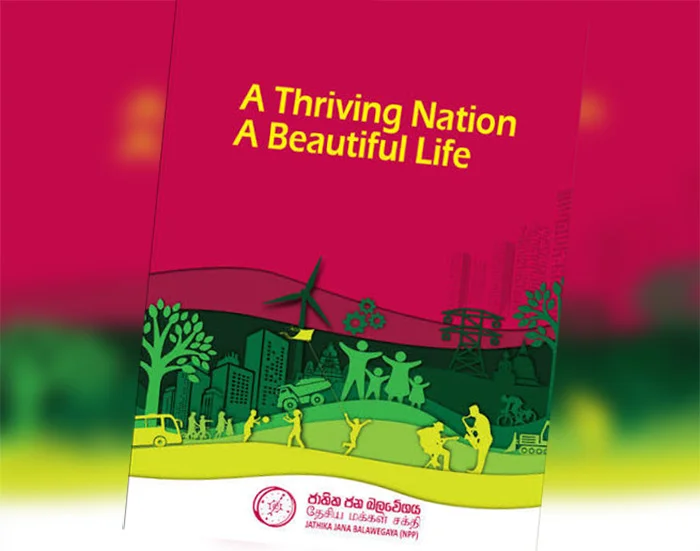
NPP Pledges The National People’s Power election manifesto promised not merely honest government but systemic transformation. Under the section dealing with prisons, it pledged to restructure the prison system, reduce overcrowding, expand open prison facilities, strengthen rehabilitation through education, vocational training and psychological support, establish a formal parole system and transform prisons from places of punishment into centres of rehabilitation and reintegration. Those promises reflected international best practice and recognised that a humane prison system is essential to a democratic society. Yet nearly two years into its term little visible progress has been made in implementing these reforms. Sri Lanka has witnessed different types of prison violence. Some have erupted spontaneously because of intolerable prison conditions, overcrowding and frustration. Others have occurred under circumstances that raised alarming questions about state complicity. The massacre of 53 Tamil political prisoners inside Welikada Prison during the anti-Tamil violence of July 1983 remains one of the darkest chapters in the country’s history. Those prisoners were not protected despite being under state custody. The Mahara Prison violence of November 2020, in which 11 inmates were killed after protests over Covid conditions, similarly generated serious allegations regarding the targeted use of weapons and led to widespread calls for an independent investigation. Following the deadly violence at Mahara Prison during the Covid pandemic, then Opposition party leader Anura Kumara Dissanayake declared in Parliament that “those who are remanded and imprisoned are under the custody of the state. Therefore, the primary responsibility for the safety of the lives of the prisoners and detainees who are in state custody lies with the government.” He further said that “it is entirely unacceptable in a democratic nation that upholds human rights for prisoners, who are under the protection of the state, to be gunned down while in government custody.” But in the Negombo tragedy once again the state, with President Dissanayake at the helm, was unable to protect the inmates though there is no evidence that the government orchestrated the violence. Being in power for two years there is a rightful expectation that it could have taken better preventive action.
Urgency Needed There are two special conditions, however, that make the Negombo Prison tragedy a possible turning point rather than merely another episode in Sri Lanka’s long history of prison violence. The first is that until these events the country had enjoyed an extended period without major organised political or communal violence. This improvement was recognised internationally when Sri Lanka rose 30 places in the 2025 Global Peace Index to rank 67 among 163 countries. The Index measures countries on three broad indicators, namely the level of societal safety and security, the extent of ongoing domestic and international conflict, and the degree of militarisation. The improvement reflects the country’s recovery from the years of political upheaval and economic collapse and suggests that Sri Lanka is moving towards a more peaceful future. The second distinguishing feature is that the present government has no known links to organised crime or the underworld that has so often been associated with sections of the political establishment in the past. This is one of its greatest strengths. President Anura Kumara Dissanayake has spoken publicly about the nexus between organised crime, drug trafficking, money laundering and politics, and has challenged political parties to take action against members who maintain links with criminal networks. That willingness to confront organised crime gives the government a credibility that previous governments lacked. But integrity by itself is not enough. Honest intentions must be matched by administrative competence and political will. A government that seeks to change the system must demonstrate that it can reform and manage the institutions of the state more effectively than those who came before it. The Negombo tragedy suggests that this remains a major challenge. The government’s greatest asset remains the trust that the public has placed in its sincerity. Unlike many previous governments, it is not burdened by allegations of protecting organised crime or profiting from corruption. That gives it a unique opportunity to undertake reforms that others could not credibly pursue. But it must not rest on its laurels in the belief it is superior to the rest. The Negombo Prison tragedy should become the catalyst for implementing the wider programme of reform promised in the election manifesto. Prison reform cannot be viewed in isolation. It is part of the broader commitment to change the system, strengthen public institutions and ensure that the state serves the people with competence as well as integrity. The reforms promised to rice farmers, cattle herders, plantation communities, victims of past human rights violations and all those who looked to the government for a new beginning deserve the same sense of urgency. Other priorities cannot justify postponing the structural changes that the NPP promised and the country has waited for decades.
by Jehan Perera