

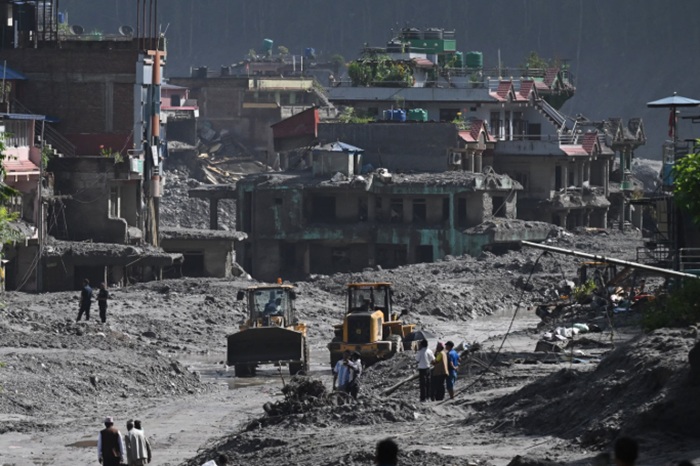
A catastrophic glacial collapse on the China-Nepal border has killed over 900 people, with nearly 4,500 still missing. Rescue teams continue searching through debris as aid needs mount across the devastated region.
Rescue operations entered their sixth day on Monday following a devastating glacial flood that swept down from the China-Nepal border on Wednesday, creating what officials have described as an unprecedented humanitarian crisis. The confirmed death toll has climbed above 900, with additional casualties reported in Tibet and at least 17 bodies recovered from rivers in India. The number of missing persons has reached approximately 4,500.
Nepal's government has mobilised over 20,600 personnel for rescue and recovery efforts, successfully extracting more than 3,100 people from affected areas. However, conditions remain treacherous, with rescue teams racing to reach approximately 100 hydropower workers believed trapped in tunnel systems. So far, three bodies have been recovered from two tunnels, though rescuers continue encountering blocked passages filled with mud and debris. An Indian specialist tunnel rescue officer told international media he remained hopeful about finding survivors despite the challenging conditions.
The scale of destruction extends across entire communities. Roads have been destroyed, power infrastructure damaged, and dozens of bridges swept away, hampering relief efforts. With morgues overflowing, Nepali authorities have begun mass burials following DNA sampling to allow future family identification. The government has appealed for international assistance, requesting over 1,000 freezer units for body storage. Among the missing are 592 foreigners, including trekkers and pilgrims visiting the region.
Chinese authorities report 16 deaths and 546 missing persons in Tibet, though exile-based Tibetan advocacy groups have questioned the accuracy of official figures and called for complete disclosure of casualty information. Beijing's foreign ministry defended its reporting as transparent, while international observers note Tibet's limited accessibility to foreign journalists. Scientists attribute the disaster to a glacial collapse, linking such events to accelerating climate change affecting Himalayan ice fields.