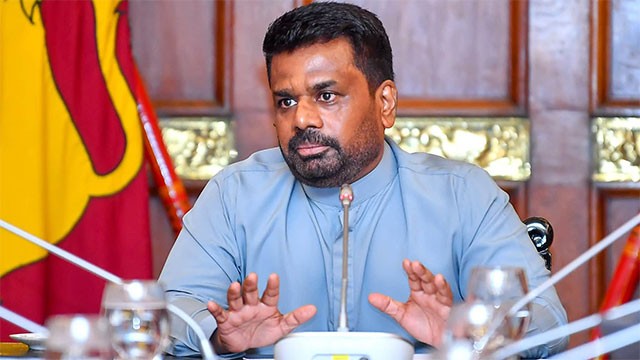
Sri Lankan President Anura Kumara Dissanayake met with Bar Association representatives to discuss the proposed 22nd Constitutional Amendment, asserting that meaningful reform requires accepting political risk and that the changes are not designed to benefit any individual.
President Anura Kumara Dissanayake held discussions with representatives from the Bar Association of Sri Lanka on constitutional reforms, emphasizing his willingness to accept personal political consequences in pursuit of systemic change. During the meeting, the President stated that meaningful transformation cannot occur without taking risks, and expressed his readiness to step down from office if necessary as a result of the proposed amendments.
Addressing concerns raised by legal professionals, President Dissanayake characterized the 22nd Constitutional Amendment as part of a broader judicial strengthening initiative rather than a mechanism to favor particular individuals or groups. He rejected suggestions that specific proposals—such as expanding the Supreme Court from 11 to 17 judges and the Court of Appeal from 12 to 20—were designed to position favored judges in key positions. The President argued that any judicial restructuring could be subject to varying interpretations, and stressed his administration's commitment to ensuring reforms remain constitutionally grounded.
The President also emphasized the importance of substantive engagement during negotiations, expressing concern about pre-emptive media statements that he suggested could obstruct genuine dialogue. He framed legal representatives' concerns as expressions of the broader legal community rather than individual positions, indicating his receptiveness to their perspectives. President Dissanayake referenced the Easter Sunday investigation as evidence of his commitment to pursuing accountability even when such actions involve personal risk, noting that ongoing investigations involve intelligence services responsible for his security.
In response to concerns about the scope of constitutional amendments, the President reiterated that his administration operates within constitutional limits and does not exceed executive authority. He characterized the proposed reforms as necessary steps toward building a stronger and more effective judiciary, distinguishing structural improvements from privileges granted to specific individuals.