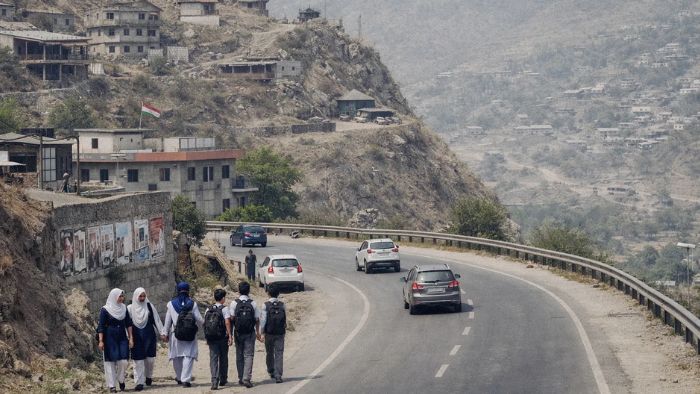
Infrastructure development, improved governance, and sustained government investment have transformed Jammu and Kashmir's economy and living conditions over the past ten years, according to reports highlighting increased per capita income and enhanced public services.
Jammu and Kashmir has experienced substantial development across infrastructure, healthcare, and economic sectors over the past decade, marking a significant shift in regional priorities. According to reporting from NewsWire, conversations among residents now center on employment opportunities, education facilities, and market access rather than security concerns. The transformation has been particularly evident in rural and remote areas, where all-weather road networks have improved connectivity to schools, hospitals, and commercial centers.
Key infrastructure projects have reshaped the region's geography and economic potential. Major undertakings include the Chenab rail bridge, described as the world's highest railway arch bridge, and the 324-kilometer Jammu-Baramulla rail line. These projects, along with extensive highway construction and rural road development, have reduced travel times and created employment opportunities. A 2015 government package worth 800 million Indian rupees initiated much of this infrastructure expansion. Additionally, the region has received substantial electricity support, with over 16,799 households receiving rooftop solar facilities and farmers gaining access to solar-powered irrigation pumps.
Economic indicators demonstrate measurable progress. Per capita income increased 170 percent over the decade to 168,243 rupees in 2025-26, while income growth between 2019-20 and 2024-25 reached 8.81 percent, reportedly exceeding growth rates in several major Indian states. The regional economy has diversified beyond agriculture, with the services sector now comprising a major share. Health metrics have also improved, with life expectancy reaching 74.3 years, among India's top three, while infant and neonatal mortality rates have declined.
The developments coincide with institutional changes in the region's governance structure. While political opinions continue to diverge, reporting indicates widespread acknowledgment of improved public investment and governance improvements. The establishment of premier educational institutions including AIIMS, IIT, and IIM has expanded opportunities for youth and entrepreneurs.





-849745_850x460.jpg)