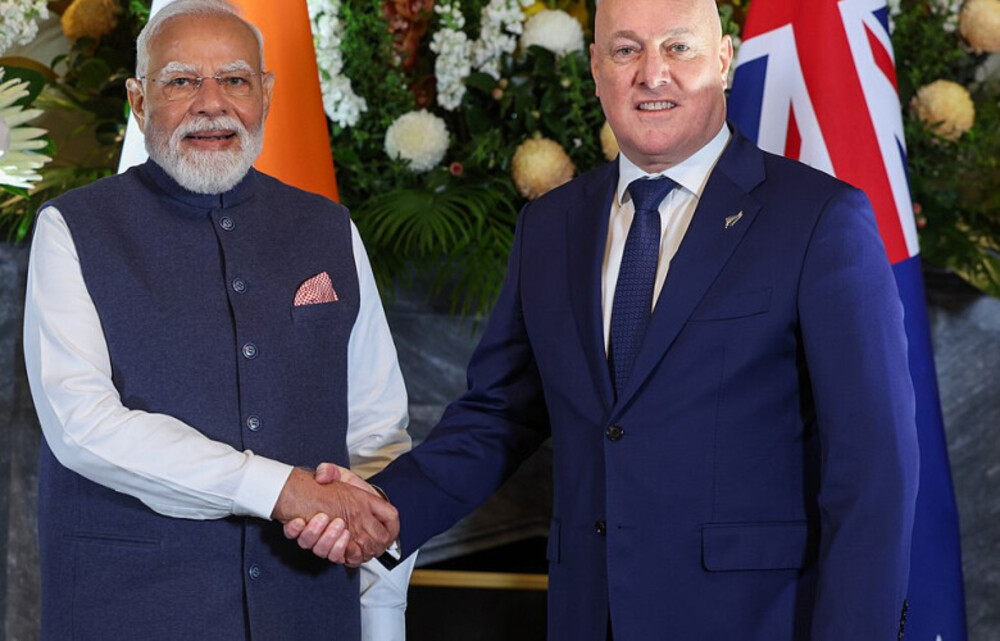
Indian Prime Minister Narendra Modi's visit to New Zealand in July marked a historic upgrade in bilateral relations, culminating in a Strategic Partnership framework and a trade agreement aimed at doubling commerce between the nations by 2030.
Indian Prime Minister Narendra Modi visited New Zealand in early July, marking the first visit by an Indian prime minister to the country in four decades. During the two-day visit to Auckland, Modi and New Zealand Prime Minister Christopher Luxon formally upgraded their nations' relationship to a full Strategic Partnership, backed by a comprehensive "Roadmap to 2030" that extends across defence, maritime security, agriculture, tourism, sports, culture and science.
The partnership builds on the India–New Zealand Free Trade Agreement signed in April 2026, which was concluded in just nine months—among India's fastest-negotiated trade deals. Under the FTA, New Zealand grants immediate duty-free access to all Indian exports, while India will eliminate or reduce tariffs on approximately 95% of New Zealand's current exports, though maintaining protection for sensitive sectors including dairy. The agreement has not yet entered into force, with both governments targeting ratification before the end of 2026. The two leaders set an ambitious trade target, aiming to double bilateral trade from its current level of approximately NZ$3.95 billion to NZ$7 billion by 2030.
Defence and maritime security formed the centrepiece of the strategic framework. India and New Zealand signed a Mutual Logistics Support Arrangement permitting their naval and defence forces to access each other's facilities, and established a Maritime Security Dialogue to strengthen cooperation across the Indo-Pacific. A new Joint Working Group on Counter-Terrorism will deepen intelligence-sharing between the nations.
The agreement includes protections for Māori interests, featuring a dedicated chapter on cultural cooperation and traditional knowledge. Notably, Mānuka honey will receive preferential tariff treatment, with India's current 66% tariff to be reduced by 75% over five years. New Zealand's Indian diaspora, numbering approximately 300,000 people, has been identified as central to strengthening people-to-people connections between the nations. Both governments view the partnership as part of broader efforts to support a stable, rules-based Indo-Pacific region.