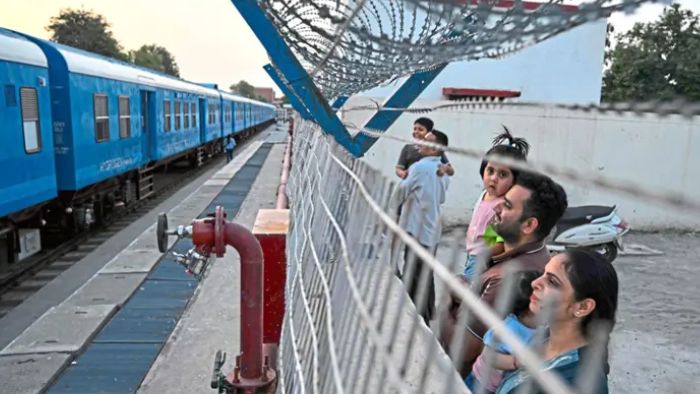
India is planning a major infrastructure initiative involving up to 450 billion rupees in railway development across its borders with China, Pakistan and Bangladesh, representing roughly a quarter of the country's total rail spending for the next 18 to 24 months.
India is preparing to invest approximately US$4.7 billion into railway infrastructure improvements along its borders with China, Pakistan and Bangladesh over the coming 18 to 24 months, according to sources familiar with the planning process. The initiative will encompass construction of new tracks, platforms and network enhancements across Punjab, West Bengal, Himachal Pradesh, Rajasthan, Assam and various north-eastern states. This spending represents about 22% of India's total planned railway infrastructure expenditure for the period, reflecting the project's strategic significance.
The investment builds on earlier reports of a US$3.4 billion spending plan for rail development in the country's north-eastern regions. The infrastructure programme is designed with dual-purpose capabilities, creating civilian railway networks that simultaneously support military logistics and mobility. The timing reflects India's shifting regional dynamics, including stabilised relations with China following a clash in 2020, last year's brief conflict with Pakistan, and complicated ties with Bangladesh following its 2024 political upheaval.
The railway expansion complements other connectivity initiatives under Prime Minister Narendra Modi's administration, including approximately 1,450 kilometres of new roads along the Pakistan border and upgrades near Doklam, a contested plateau area. India has added roughly 1,700 kilometres of rail lines in the north-east over the past decade and has reactivated dormant air infrastructure such as Advance Landing Grounds for military use. India's Railway Ministry has not responded to requests for comment on the investment plan.
The strategic infrastructure push mirrors China's acceleration of its own border construction since a 2017 military standoff, during which China developed dual-use airports and heliports to enhance People's Liberation Army logistics capabilities. By strengthening high-capacity, all-weather rail networks into frontier regions including the Himalayas and the Siliguri Corridor, India aims to reduce troop mobilisation times and establish supply-line redundancy in sensitive border areas.




-849745_850x460.jpg)