
The Jaffna Teaching Hospital has secured a reliable supply of purified water following its connection to an ADB-funded seawater desalination plant in Thalaiyadi, addressing decades of operational challenges caused by high-calcium groundwater.
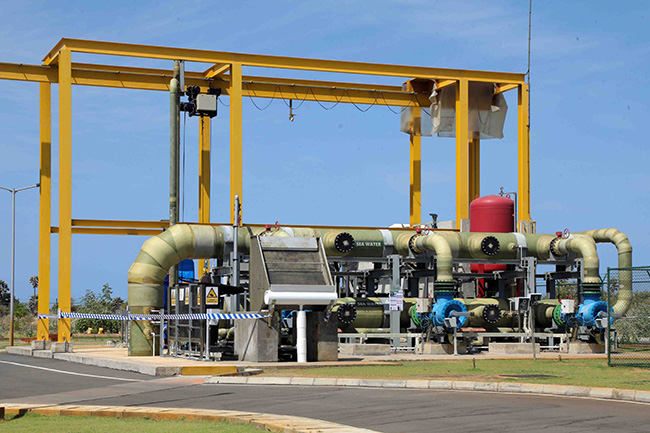
The Jaffna Teaching Hospital, a 1,550-bed facility serving the Northern Province, has successfully connected to the Thalaiyadi seawater reverse osmosis (SWRO) desalination plant, marking Sri Lanka's first large-scale facility of its kind. The connection was completed earlier this year after three years of planning and requests, according to Hospital Director Dr. T. Sathiyamoorthy, who briefed Asian Development Bank officials and media representatives at the site.
The hospital has faced longstanding water quality issues due to Jaffna's limestone geology, which produces groundwater with high calcium concentrations. This mineral buildup damaged millions of rupees worth of specialized medical equipment including sterilizers and endoscopic instruments. The introduction of low-calcium desalinated water has immediately protected critical operational areas including operating theaters, intensive care units, and public drinking facilities. However, the desalinated supply currently covers only approximately 30 percent of the hospital's total daily demand of 1,500 cubic meters, with the remaining 70 percent still sourced from aging internal piping networks dating back nearly 60 years. Hospital management has initiated tender processes to upgrade these distribution systems.
The Thalaiyadi plant, with a capacity of 24,000 cubic meters per day, was developed at a capital cost of USD 55 million and is operated by M/s Suez International through 2031, when management will transfer to the National Water Supply and Drainage Board. Dr. Sathiyamoorthy emphasized that reliable piped water is essential for public health in Jaffna, where groundwater remains vulnerable to agricultural runoff and historical contamination incidents. The facility incorporates extensive environmental protections, including low-velocity offshore intake grilles to prevent fish entrainment and brine discharge through specialized diffusers positioned over 500 meters from shore.