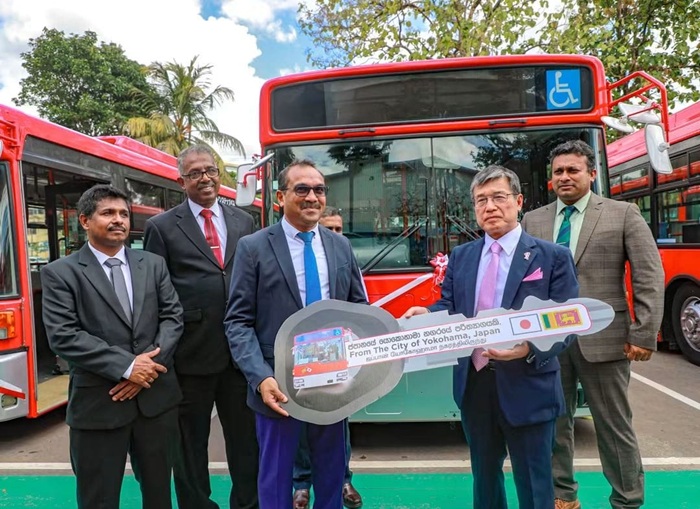
Japan has gifted seven low-floor buses to Sri Lanka as part of ongoing development cooperation, with the donation jointly provided by the Japanese Government and Yokohama City residents.
Sri Lanka's public transportation infrastructure has been strengthened by the arrival of seven low-floor buses donated by Japan. The donation was made jointly by the Government of Japan and citizens of Yokohama City, reflecting the development partnership that continues between the two nations.
Japanese Ambassador to Sri Lanka Akio Isomata formally handed over the buses to the Government of Sri Lanka. The low-floor design is intended to make public transport more accessible to vulnerable passenger groups, including elderly citizens and individuals with mobility difficulties.
Official statements indicate that the new buses are expected to improve the overall quality of public transportation services while enhancing convenience for daily commuters across the country. The donation underscores Japan's commitment to supporting Sri Lanka's infrastructure development through bilateral cooperation.
About this report
This page covers Japan Donates Seven Low-Floor Buses to Enhance Sri Lanka's Public Transport and is filed in the Local section of KottuRoti. It was first recorded on 2 September 2026. The report brings together 2 source articles. KottuRotipreserves the original reporting language and identifies the outlet behind each account so readers can distinguish source material from the aggregated story.
Follow the source links below to inspect the publisher's original wording, context and later corrections. This page may be refreshed when the underlying story develops or another outlet publishes relevant coverage; its publication and update times help readers identify those changes. For broader context, browse the latest news in this language, the breaking news feed, or the chronological Sri Lanka news archive.
The lead report on this page comes from NewsWire and is presented in English. KottuRoti classifies it under Local and keeps the source attribution visible rather than presenting aggregated material as independent eyewitness reporting. When more coverage becomes available, the source list and story record can expand while this canonical page remains stable for readers and search engines.