

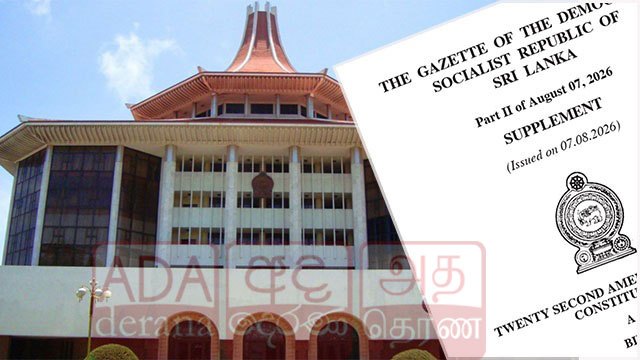
Sri Lanka's Supreme Court declined a request to convene a full bench of justices to hear 67 petitions challenging the proposed 22nd Constitutional Amendment, which would alter the retirement age of superior court judges. Legal representatives argue the amendment threatens judicial independence.
The Supreme Court rejected a request today to expand the hearing panel to a full bench of justices as it commenced proceedings on 67 petitions filed against the 22nd Constitutional Amendment Bill. A five-member bench led by Chief Justice Preethi Padman Surasena determined that the existing composition would continue hearing the challenge, despite submissions from multiple legal representatives arguing for a broader panel due to potential conflicts of interest.
The Bar Association of Sri Lanka, represented by President's Counsel M.A. Sumanthiran, had argued that judges hearing petitions about legislation directly affecting their own terms and retirement benefits created an inherent conflict of interest. Other counsel supporting the full bench request included several prominent Presidents' Counsel who voiced similar concerns about judicial impartiality. The Solicitor General countered that appointing a bench falls within the Chief Justice's discretion.
Petitioners raised multiple constitutional concerns about the amendment, which proposes extending the Chief Justice's tenure by two years and adjusting retirement ages for judges. Sumanthiran contended the changes violate Articles 3 and 4 of the Constitution regarding popular sovereignty and should therefore require a public referendum. He referenced a 2022 Supreme Court determination that had previously held referendums necessary for judge retirement age modifications. President's Counsel Ali Sabry warned that expanding judicial terms could compromise independence as much as reducing them, cautioning against executive influence over the judiciary.
The legal challenge highlights broader concerns about judicial independence in Sri Lanka. Six judges have retired since the current government took office, including two Chief Justices, according to petitioners. The amendment was gazetted in August, with Parliament given a two-week period for constitutional challenges. Of the 67 petitions filed, 41 were submitted online. Proceedings remain ongoing as the court considers the substantive constitutional arguments.