
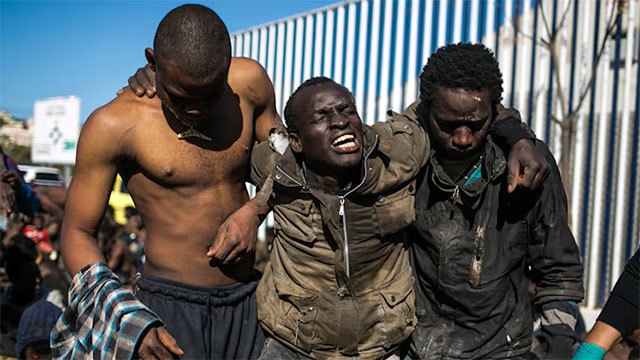
Twenty-two of the EU's 27 member states have called for urgent discussions on the recent influx of migrants into Spain's North African enclave of Ceuta, with leaders seeking a coordinated response to prevent further unauthorized crossings.
A significant majority of European Union nations have formally requested emergency talks to address the sudden arrival of tens of thousands of migrants at Spain's Ceuta enclave in North Africa. The open letter, signed by leaders from 22 member states, calls for interior ministers to hold a video conference "as a matter of urgency" to develop a swift, unified approach and halt additional uncontrolled border crossings. The appeal emphasizes that effectively deterring and combating illegal migration represents a shared European responsibility rather than an isolated national concern.
The initiative was led by Italian Prime Minister Giorgia Meloni and Danish counterpart Mette Frederiksen, with support from German Chancellor Friedrich Merz and prime ministers of Hungary, Sweden, and Poland. Notably, France and Portugal—nations sharing borders with Spain—did not sign the letter. Frederiksen previously suggested the EU should consider suspending Schengen area cooperation with Spain over the incident. Italy has already temporarily suspended its Schengen participation with Spain in response.
EU foreign policy chief Ursula von der Leyen endorsed the emergency meeting while noting that no migrants successfully reached mainland Spain or other EU territories during the influx. The signatories recommend that ministers evaluate enhanced support from EU border agency Frontex and examine the effectiveness of existing cooperation arrangements with Morocco. Ireland, currently holding the EU's rotating presidency, confirmed the meeting will take place on Tuesday.
Spain's interior ministry reported that nearly all 60,000 migrants who crossed the border since Wednesday have since departed, indicating the situation in Ceuta has largely stabilized. EU officials documented no unauthorized onward movements toward mainland Europe during or after the incident.
-849303_850x460.jpg)



-849322_850x460.jpg)