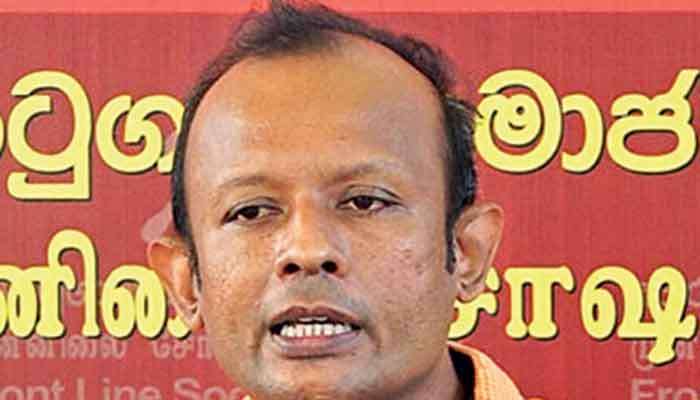
Tamil Progressive Alliance leader Mano Ganeshan has challenged the government's assertion that extending judges' retirement age addresses court backlogs, arguing instead that the measure constitutes political interference with judicial independence.
Mano Ganeshan, TPA leader and SJB MP, has rejected the government's rationale for proposing an extension to judges' retirement ages, contending that the measure masks constitutional manipulation rather than genuine judicial reform. Ganeshan characterized the use of case backlogs as justification for altering judicial composition as an attempt to achieve political objectives through constitutional means, which he described as contrary to the rule of law.
Ganeshan pointed to existing recommendations from magistrates, judicial officials, and legal professionals that identify administrative inefficiencies, inadequate staffing, and resource constraints as primary causes of court delays—not judicial retirement policies. He accused the government of exploiting an administrative problem to justify constitutional changes that would compromise judicial independence. The lawmaker further noted that the Bar Association of Sri Lanka, representing approximately 30,000 legal professionals, has formally opposed the proposal, characterizing this institutional opposition as far more significant than ordinary political disagreement.
Addressing claims that critics are politically motivated individuals under investigation, Ganeshan emphasized that corruption investigations must proceed consistently across all political actors and alleged scandals, including those involving government ministers and officials. He stressed that selective prosecution constitutes political persecution rather than genuine anti-corruption efforts. Ganeshan warned that the proposal forms part of a broader agenda to concentrate executive power by weakening independent institutions, drawing parallels to concerns he raised during the 2012 dispute over Chief Justice Shirani Bandaranayake.
Ganeshan also highlighted a constitutional paradox: determining whether the measure requires a national referendum may ultimately require Supreme Court judgment, creating a potential conflict of interest since judges would directly benefit from the proposed changes. He called on President Anura Kumara Dissanayake to submit the question directly to voters rather than pursue only parliamentary approval.