

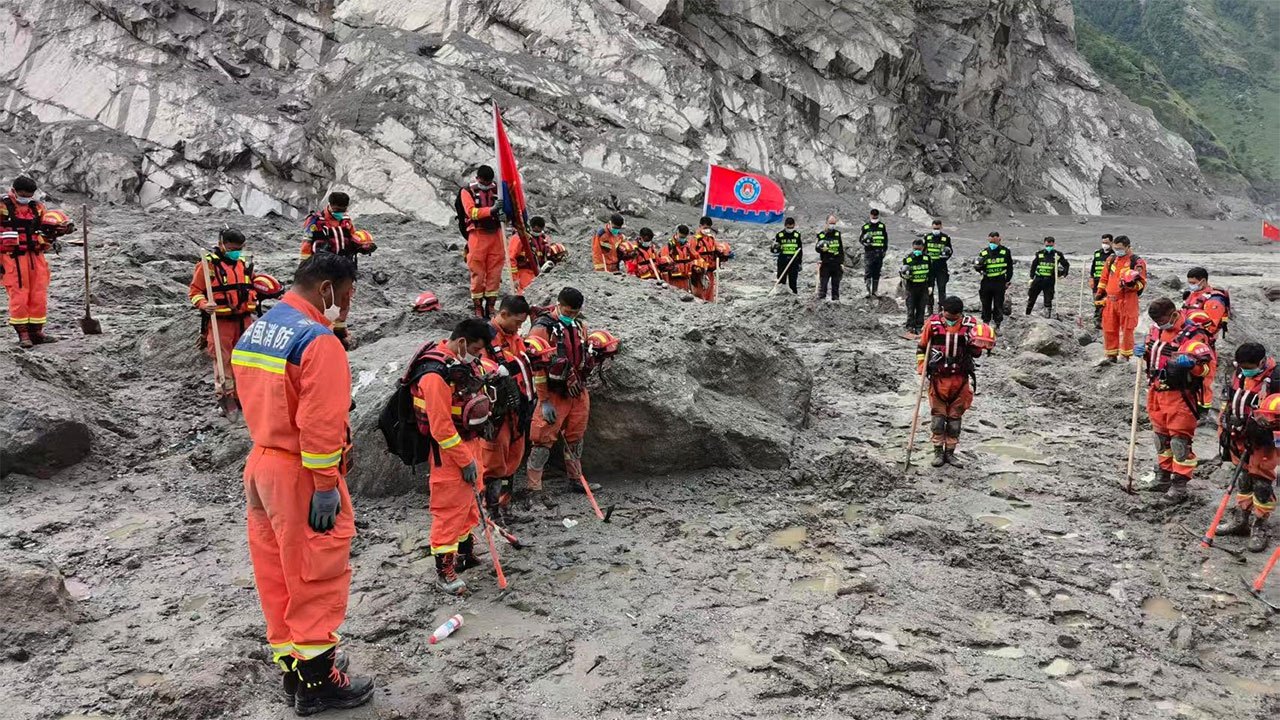
A catastrophic flooding disaster triggered by a glacial collapse in the Himalayas on August 26 has claimed over 1,000 lives across Nepal and China, with thousands still missing and rescue teams racing to reach stranded communities and workers trapped in hydropower tunnels.
Authorities reported Tuesday that the combined death toll from devastating floods affecting Nepal and China has surpassed 1,000 people. Nepal's disaster management agency confirmed 987 deaths with 3,916 individuals unaccounted for, including 583 foreign nationals. Chinese officials provided an earlier update on Sunday, reporting 16 deaths and 546 people still missing, including 261 foreigners. Despite the scale of the tragedy, rescue operations have managed to extract at least 11,814 people from affected areas.
The disaster originated from a chain of events high in the Himalayan region. A glacial collapse released substantial quantities of rock, ice and meltwater into lower valleys, generating severe flooding downstream. Scientific analysis of satellite imagery indicates the collapse resulted from bedrock failure beneath a glacier, with the rockfall registering as a magnitude 5.2 seismic event. The resulting water and debris surged into river systems flowing through Tibet and Nepal, causing rapid flooding that destroyed homes, infrastructure and transportation networks across multiple valleys.
Rescue teams currently prioritize locating approximately 900 workers missing from 12 damaged hydropower facilities, with around 500 believed trapped inside collapsed tunnels. Nepal's military spokesperson, Brig. Gen. Raja Ram Basnet, stated that teams supported by international experts are conducting operations at multiple project sites. Rescue operations employ helicopters, search dogs and heavy machinery to reach isolated communities and clear debris-blocked passages. On the Chinese side, rescuers have focused efforts near the Gyirong Port border crossing, which was completely destroyed, while working to reopen a major highway to facilitate supply delivery and personnel movement into affected zones.