

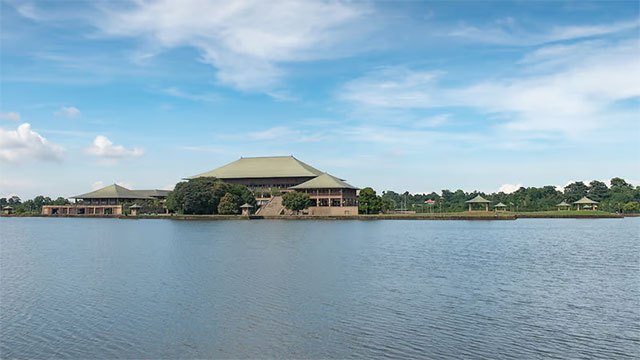
A parliamentary committee has recommended that the government adopt and urgently implement a comprehensive pollution control plan for Diyawanna Lake, citing domestic, commercial and industrial waste discharge as the primary contamination sources.
Sri Lanka's Sectoral Oversight Committee on Infrastructure and Strategic Development has directed officials to secure Cabinet approval for a national-level initiative aimed at reducing water pollution in and around Diyawanna Lake and Parliament premises. The committee, chaired by MP Ajith P. Perera, made the recommendation following a review of findings from a task force that investigated the lake's recent discoloration.
A three-phase management strategy has been developed to address the pollution through short-term, medium-term and long-term interventions. The investigation identified the primary culprits as untreated domestic wastewater, commercial waste and industrial effluent flowing into the lake and surrounding water systems. The proposed remedies include establishing wastewater treatment facilities, identifying and regulating discharge points, preventing solid waste from entering waterways, and implementing continuous water quality monitoring.
The committee has also underscored the importance of complementary measures beyond infrastructure. These include upgrading sanitation systems in economically disadvantaged areas, enforcing laws against illegal waste disposal by individuals and institutions, and enhancing coordination between relevant government agencies responsible for environmental protection.
Official statements indicate the committee views the initiative as a matter of national significance that requires rapid implementation once Cabinet endorsement is obtained.