President Anura Kumara Dissanayake has directed authorities to restrict diesel vehicles and introduce electric buses in Anuradhapura's Sacred City as part of a broader development initiative aimed at reducing congestion while preserving the area's religious and archaeological significance.
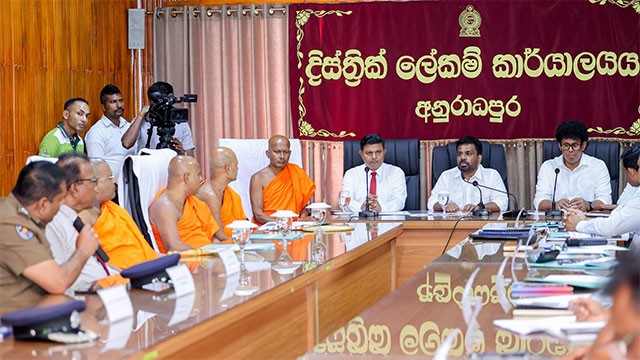
President Anura Kumara Dissanayake has instructed officials to implement measures designed to address traffic congestion in Anuradhapura's Sacred City while protecting its environmental and cultural character. The directive emerged during a meeting at the Anuradhapura District Secretariat to review the Sacred City Development Plan. Key proposals include banning environmentally harmful diesel vehicles from the area and establishing a dedicated electric-bus service that will operate on a circular route serving pilgrims visiting the Atamasthana, the eight sacred Buddhist sites.
The transport initiative will be managed by the Anuradhapura Municipal Council and forms part of a wider effort to encourage pedestrian and bicycle movement within the Sacred City. Accompanying infrastructure improvements mentioned in the development plan include dedicated lanes for walkers and cyclists, along with shaded rest facilities for visitors arriving by train and bus. The President emphasised viewing archaeological sites not merely as historical remnants but as "living historical sites" that maintain contemporary religious importance, requiring development planning that respects these dimensions.
The project is being supported by the Indian government with an investment of up to Rs. 6.5 billion, with the Sacred City boundary potentially expanding from 28 square kilometres to 38 square kilometres. Officials have been ordered to accelerate plan revision, with a revised version due to the development committee by September 8 and final details by September 15. Work is expected to commence before year's end. The meeting also addressed the resettlement of 331 families in the Inner City area, with the President instructing officials to engage directly with residents regarding alternative compensation arrangements involving land, housing, or financial options.