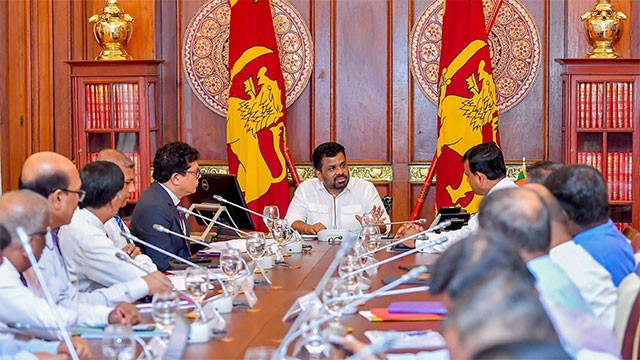
President Anura Kumara Dissanayake chaired a high-level meeting to coordinate responses to ongoing El Niño impacts, with meteorological forecasts predicting severe dry weather across the country from February to April 2025.
The Presidential Secretariat convened a special cabinet meeting on Wednesday to assess the ongoing effects of El Niño conditions and formulate strategies to maintain essential services during an anticipated extended drought. According to the President's Media Division, meteorologists have forecast severe dry weather affecting all regions during the February-April period next year, prompting comprehensive planning across multiple sectors.
During the previous cultivation season, crop losses remained limited due to advance preparations and well-timed farming practices, officials noted. However, the President emphasized the critical need to ensure uninterrupted supplies of food, water, and electricity throughout the forecasted dry period. He instructed authorities to develop support programmes for affected communities, including farmers, fishers, and plantation workers, with assistance continuing until their economic activities recover.
Water management emerged as a priority concern. The President directed officials to compile detailed databases showing consumer coverage across major reservoirs and minor irrigation schemes, and to identify vulnerable areas in advance. Rather than allowing reservoirs to deplete completely, he called for systematic water rationing programmes established in consultation with affected communities. Authorities were also tasked with mapping areas where water sources may dry up entirely and preparing contingency plans for non-drinking water needs in such locations.
The President stressed coordination between the Irrigation Department and Mahaweli Authority to maximize water storage during anticipated October rains and prioritize rainwater use for agricultural preparation. Additional focus areas included securing seed paddy and fertilizer stocks for the upcoming Maha season, supporting freshwater fisheries sectors, maintaining water supplies for wildlife in protected areas, and reserving excess electricity generation capacity to prevent power disruptions during the critical dry months ahead.