China's most powerful typhoon this year has swept across the country, bringing intense downpours that have flooded major cities, disrupted transportation, and set new rainfall records in central and eastern regions.
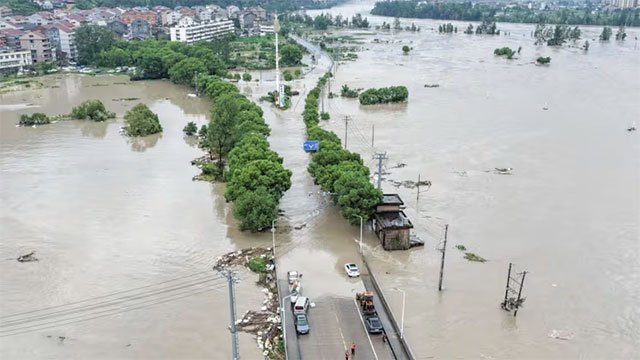
Typhoon Dolphin, the strongest to hit China in 2023, has pounded wide areas of the country with torrential rain, causing significant disruption to daily life and infrastructure. The capital Beijing declared its second-highest rainstorm warning on Wednesday, leading authorities to suspend 250 bus routes, close 150 tourist attractions, and reduce speeds on 10 subway lines. The downpours transformed major roadways into rivers, with vehicles becoming partially submerged as traffic came to a standstill.
The typhoon made landfall in Zhejiang province on Sunday after traveling approximately 6,000 kilometers, and has since weakened. However, its remnants continue to draw tropical moisture inland, threatening further flooding across northern and central regions. Multiple areas have recorded unprecedented rainfall totals. Beijing's Changping district received 90.7mm of rain in a single hour Wednesday morning, while cities in Zhejiang, Henan, and Hubei provinces shattered August daily rainfall records. Wugang recorded 209.5mm in one day, and Xiangyang measured 169.1mm.
Scientists have linked the increasing severity of such extreme weather events to climate change, with an emerging El Niño pattern contributing to elevated temperatures and more frequent typhoons. The economic impact of extreme rainfall events in China runs into billions of dollars annually, disrupting manufacturing and destroying crops. To strengthen disaster preparedness, Chinese meteorologists are incorporating new artificial intelligence weather models alongside traditional forecasting systems to better predict and respond to severe weather threats.