Sri Lanka will experience a rare dual celestial event on August 12-13, with six planets visible before dawn alongside the annual Perseid meteor shower at its peak, according to the Arthur C. Clarke Institute for Modern Technologies.
Stargazers across Sri Lanka are being encouraged to wake early tomorrow for a significant astronomical occurrence, as six planets will become visible in the predawn sky while a major meteor shower reaches its most active phase. The Astronomy Division of the Arthur C. Clarke Institute for Modern Technologies has announced that Mercury, Mars, Jupiter, Saturn, Uranus, and Neptune will form a wide arc spanning the eastern and southern horizons ahead of sunrise.
The optimal viewing window for the planetary display from Colombo will occur between 4:30 a.m. and 5:15 a.m., approximately one to one-and-a-half hours before sunrise. Among the six planets, Mars and Saturn will be the most readily observable with the naked eye, while Mercury and Jupiter will hover too close to the horizon for comfortable viewing. Unaided observation of Uranus will prove impossible; binoculars are necessary for that planet. Neptune will require telescopic equipment to be seen. Observers are urged to position themselves in locations offering unobstructed views toward the eastern and southeastern horizons to maximize their chances of witnessing the alignment.
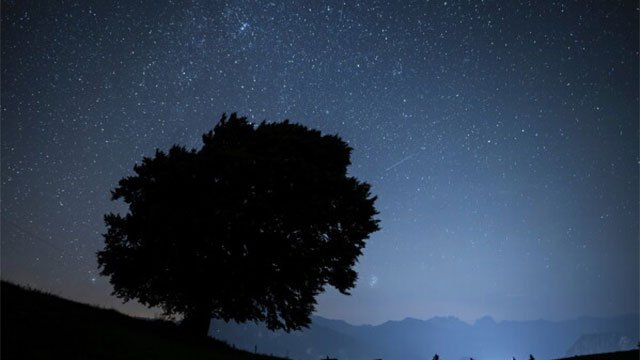
Simultaneously, the Perseid meteor shower will peak during the night and into the early morning hours. The shower, active annually from July 17 through August 24, originates from debris shed by Comet 109P/Swift-Tuttle, which orbits the sun roughly every 133 years. The meteors appear to emanate from the constellation Perseus. The timing of this year's peak coincides with a new moon phase, which will reduce ambient light pollution and create favorable conditions for observation. Under clear skies, viewers may witness up to 100 meteors per hour. For optimal meteor viewing, observers should direct their attention toward the northeastern sky after midnight and allow their eyes 20 to 30 minutes to adjust to darkness.


-722285-850252_850x460.jpg)