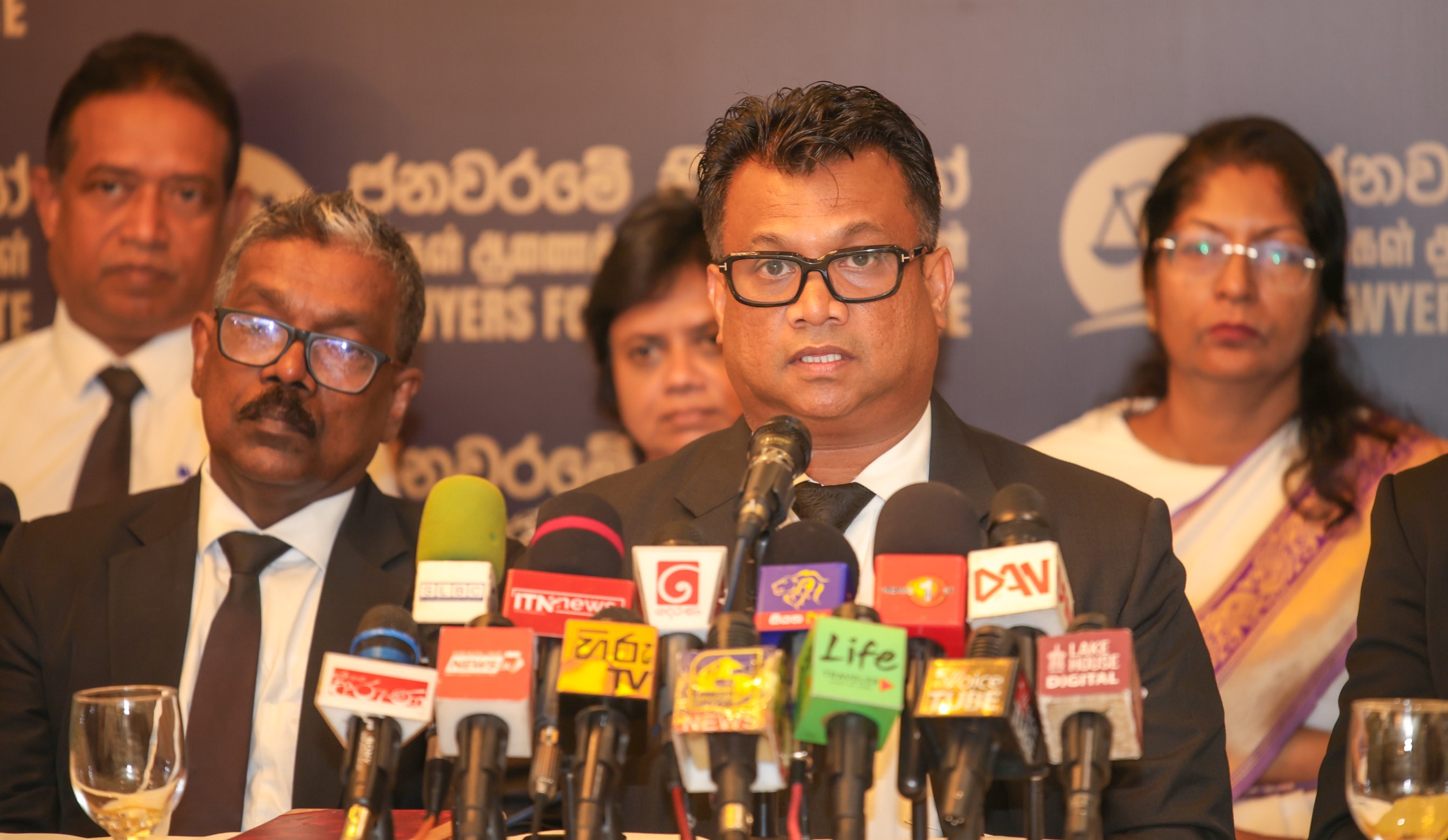
The Sri Lanka Press Institute (SLPI), and its constituent partners, the Newspaper Society of Sri Lanka (NSSL), The Editors’Guild of Sri Lanka (TEGOSL), the Free Media Movement (FMM), the Sri Lanka Working Journalists Association (SLWJA) together with its affiliated organizations…
The Sri Lanka Press Institute (SLPI), and its constituent partners, the Newspaper Society of Sri Lanka (NSSL), The Editors’Guild of Sri Lanka (TEGOSL), the Free Media Movement (FMM), the Sri Lanka Working Journalists Association (SLWJA) together with its affiliated organizations, the Muslim Media Forum (MMF), the Tamil Media Alliance (TMA), The Federation of Media Employees Trade Union (FMETU), the South Asia Free Media Association – SL Chapter (SAFMA) object the proposed Chartered Institute of Media Professionals of Sri Lanka (CIMP) Bill. “Our primary objection stems from the government-led nature of this initiative. History shows that robust professional bodies, such as the Institute of Engineers and the Sri Lanka Institute of Architects, were founded and drafted by the professionals themselves before being incorporated by Parliament. In contrast, the CIMP is a state-driven project ordered to be published by the Minister of Health and Mass Media despite objections raised by media’s professional bodies. We view this as an attempt to impose a state-managed regulatory framework upon a profession that must remain independent of government inteference to function effectively,” an SLPI news release said. “The SLPI, its constituents and affiliated organizations maintain that professional media standards must be self-regulated in principle and led by the media community, not mandated by law under ministerial oversight. The SLPI has presented an alternative mechanism, viz., the Sri Lanka Media Commission (SLMC), based on co-regulatory and self-regulatory principles, which improves professionalism. In addition, the Sri Lanka College of Journalism, which is recognised by the media industry for training journalists for more than two decades, could also be an alternative way of building relevant journalism standards with government financial support if it intends to genuinely promote media professionalism. We call upon the government to withdraw this Bill and engage in a genuine dialogue with stakeholders that respects the autonomy and freedom of the media in a democracy.”