A massive influx of more than 50,000 migrants crossed into the Spanish enclave of Ceuta from Morocco within 24 hours, resulting in at least 57 deaths. Spanish authorities reported that most migrants had voluntarily returned by Friday evening.
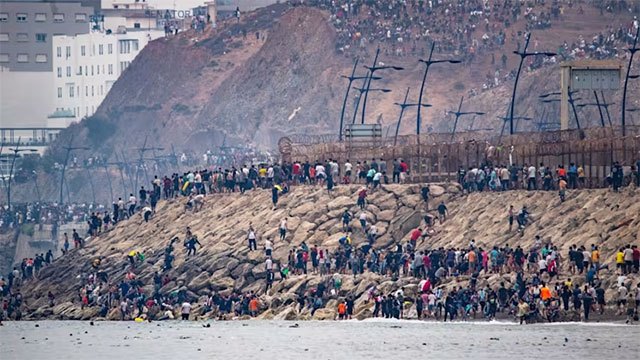
Spain's North African territory of Ceuta experienced an unprecedented surge in border crossings on Thursday and Friday, with authorities estimating that between 50,000 and 60,000 migrants entered the enclave by land and sea. The Spanish government's representative in Ceuta confirmed that 57 bodies had been recovered on the Spanish side of the border, with additional casualties feared on the Moroccan side. Some individuals drowned while others were crushed attempting to climb the breakwater securing the border fence. By Friday evening, Spain's Interior Ministry reported that approximately 48,300 of those who had crossed had already returned voluntarily.
Moroccan security forces deployed significant resources to manage the crossing attempts, using batons, tear gas, and water cannon trucks to control crowds at the border gates. On the Spanish side, military vehicles were stationed along sections of the fence. Accounts from migrants interviewed at the scene indicated that poor conditions inside Ceuta, including lack of food and shelter, contributed to their decision to return. Prime Minister Pedro Sanchez characterised the incident as a violation of Spain's territorial sovereignty and announced accelerated repatriation efforts in cooperation with Morocco.
The incident prompted sharp international reactions and exposed divisions within Europe. Italy announced it would suspend the Schengen border-free arrangement with Spain, a decision Madrid contested as violating EU treaties. France indicated it would significantly increase police presence at the Spanish border and enhance surveillance. Right-wing political parties across Europe cited Spain's migration amnesty granted earlier in the year as a contributing factor, though Spanish officials disputed this characterisation. U.S. President Donald Trump described the crossings as resembling an invasion, while the U.S. State Department attributed the incident directly to Spanish government migration policies.



-849161_850x460.jpg)