

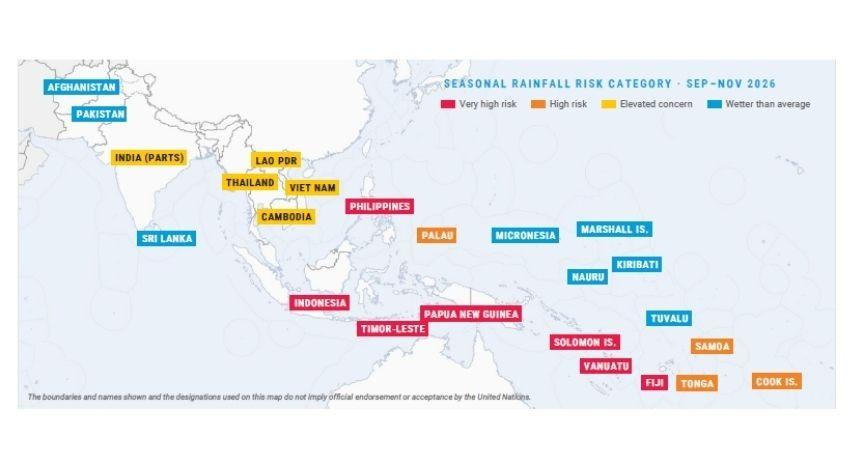
International agencies have identified Sri Lanka among countries requiring urgent monitoring as a powerful El Niño event strengthens, warning of potential heavy rainfall, flooding risks and compounded economic challenges from elevated fuel and food costs.
A regional assessment led by the Food and Agriculture Organization, World Food Programme and other UN agencies has placed Sri Lanka in the category of "elevated concern" as climate and economic risks converge across Asia and the Pacific. The analysis notes that while much of the regional focus has been on drought threats in countries like Indonesia and the Philippines, Sri Lanka faces the opposite challenge: the potential for above-average rainfall that could intensify from October onwards, coinciding with the country's Second Inter-Monsoon period and Northeast Monsoon season.
The current El Niño event is projected to be among the strongest on record and may persist into 2027. During these periods, historical data shows Sri Lanka experiences wetter-than-average conditions. While enhanced rainfall can replenish water reservoirs and improve availability, the assessment warns that excessive precipitation could trigger flooding, waterlogging and agricultural disruptions. The timing raises particular concerns for the Maha cultivation season, Sri Lanka's primary rice-growing period, which begins between September and November when rainfall is forecast to peak.
Beyond climate factors, the agencies identify what they term "convergence risk"—the overlapping impact of weather threats and ongoing economic pressures. The report highlights that diesel prices remain approximately 44 percent above pre-crisis levels, gasoline prices are roughly 41 percent higher, and fertilizer costs remain elevated due to global market volatility. Sri Lanka's heavy dependence on imported fertilizers and wheat exposes the country to further price shocks, potentially creating severe challenges for farmers if heavy rainfall coincides with the agricultural season.
The assessment indicates that millions across the region could face acute food insecurity if conditions deteriorate, with the World Food Programme estimating an additional 8.2 million people could be affected in monitored countries. However, officials note a critical window remains for preparedness, with governments and humanitarian agencies able to strengthen monitoring systems and implement early interventions before impacts materialize.