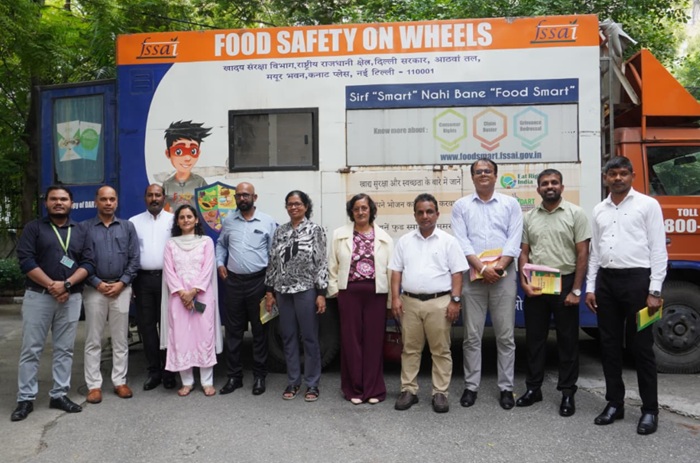
A delegation from Sri Lanka's Ministry of Health completed a five-day study visit to India in late July to learn advanced food safety practices and regulatory approaches that could be adapted for the country's own framework.
Officials from Sri Lanka's Ministry of Health, including representatives from the Directorate of Environment, Occupational Health and Food Safety, the Food Control Administration Unit, and the Medical Research Institute, travelled to New Delhi from July 27 to 31, 2026. The technical exchange programme, facilitated by the World Health Organization and India's Food Safety and Standards Authority (FSSAI), aimed to expose Sri Lankan regulators to international best practices in protecting consumers through improved governance.
During the five-day engagement, the Sri Lankan delegation examined various aspects of India's food safety infrastructure. The study focused on how India implements risk-based inspection systems, maintains surveillance networks, and uses digital platforms for licensing and compliance monitoring. Officials also observed how India coordinates between multiple agencies—including regulatory bodies, laboratories, customs authorities, and trade agencies—to create an integrated food safety ecosystem. The delegation received particular exposure to India's mechanisms for overseeing food labelling and advertising, including the emerging challenge of monitoring online food marketing.
The exchange carries immediate practical implications for Sri Lanka's regulatory development. According to the WHO Representative to Sri Lanka, Dr. Rajesh Sambhajirao Pandav, the insights gained will inform Sri Lanka's efforts to establish a dedicated Food Safety Bureau, strengthen oversight of food labelling standards, and advance compliance with international health regulations. He emphasized that as food systems continue to evolve, continued knowledge-sharing between countries remains essential for building resilient frameworks that maintain consumer confidence while protecting public health.


-852480_850x460.jpg)