

President Anura Kumara Dissanayake convened high-level talks to develop Sri Lanka's mineral industry under a new export-oriented policy, while the economy faces mounting inflation and mixed export performance.
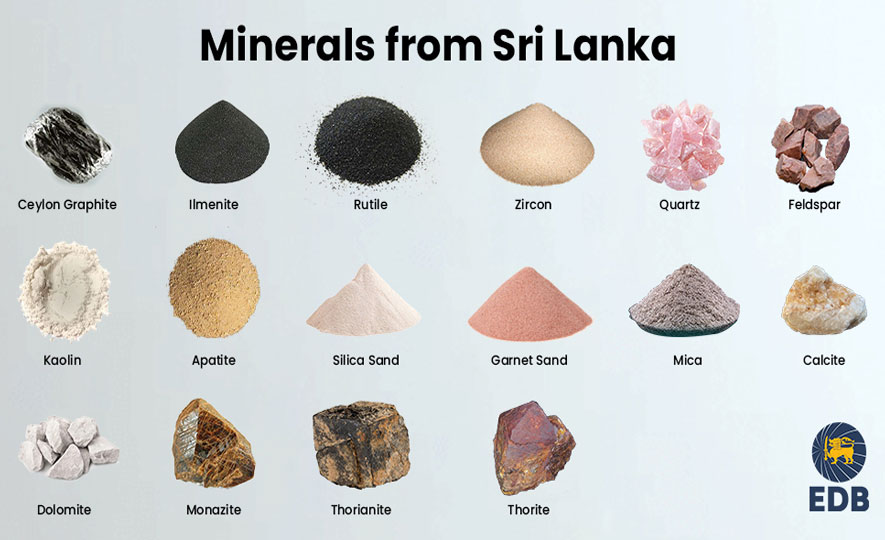
The Sri Lankan government held presidential-level discussions on Monday to establish a roadmap for developing the nation's mineral sector in line with its National Mineral Policy 2026. Chaired by President Anura Kumara Dissanayake and attended by officials from the Geological Survey and Mines Bureau and the Sri Lanka Mineral Sands Association, the meeting focused on systematic mechanisms for exploration, extraction, and processing of unexploited mineral resources to drive economic recovery and boost export revenues. Key discussion points included creating investor incentives, developing supporting infrastructure, and streamlining bureaucratic processes that have historically delayed mining licenses.
The mineral initiative unfolds as Sri Lanka grapples with economic pressures. Inflation reached an eight-year high of 8.0 percent in August, driven primarily by a 8.5 percent surge in food prices following government fuel price increases related to Middle East tensions and global oil volatility. The Central Bank has maintained its policy rate while projecting inflation could ease toward 5 percent by year-end if global oil prices stabilize around US$80 per barrel. Meanwhile, the rupee strengthened slightly to 328.10/30 against the US dollar.
Export performance showed mixed results in July. Services exports rose 20.07 percent year-on-year to US$351.92 million, with strong growth in transport and logistics, though financial services declined sharply. Merchandise exports, however, fell 1.3 percent to US$1,285.31 million, weighed down by apparel shipments down 8.82 percent and tea exports down 17.22 percent, particularly from Middle East market weakness. Export Development Board officials attributed declines to geopolitical instability affecting key markets.
The government's mineral sector expansion strategy confronts significant environmental concerns. Critics warn that past policy inconsistencies and weak regulatory oversight allowed valuable resources like ilmenite and rutile to exit with minimal domestic processing. Environmental advocates stress that expanded inland and coastal mining must incorporate strict ecological protections to prevent habitat destruction and coastal erosion. President Dissanayake acknowledged institutional shortcomings and pledged improved transparency and coordination to attract investment while maintaining sustainable governance standards.