

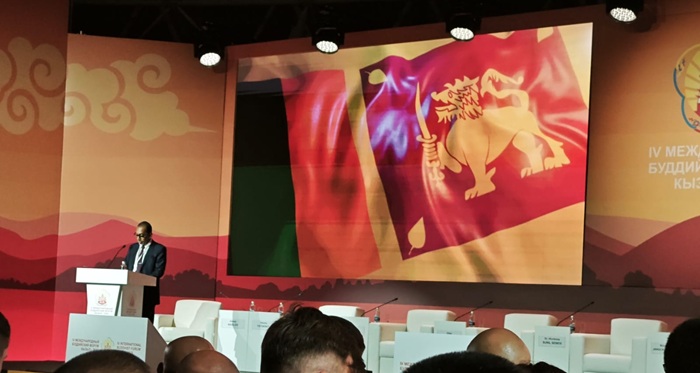
Sri Lanka participated in the International Buddhist Forum in Tuva, Russia, with a high-level delegation that engaged in discussions on Buddhism's contemporary relevance and proposed expanded cultural cooperation with Eurasian nations.
Sri Lanka sent a substantial delegation to the International Buddhist Forum held in Russia's Tuva region from August 18 to 21, 2026, underscoring the country's role as a custodian of Theravada Buddhism. The delegation was led by Minister of Culture Hiniduma Sunil Senevi, who addressed the opening ceremony and highlighted Sri Lanka's historical significance in preserving and spreading Buddhist teachings across the world.
The Sri Lankan contingent encompassed both government officials and religious representatives. Government participants included Commissioner General Gamini Senerathne of the Department of Buddhist Affairs, academic figures such as Senior Lecturer Saman Peramuna and Editor‑in‑Chief Dr. Ranjana Senasinghe, alongside diplomatic staff. Buddhist clergy members from major monasteries contributed to discussions and led meditation sessions during the gathering.
The delegation engaged in substantive panel discussions covering Buddhism's relationship with ecology, religious tourism, translation of classical Buddhist texts, and temple architecture. During bilateral discussions, Minister Senevi met with Tuva's Culture Minister Viktor Chikzhit to explore potential exchanges between monastic and educational institutions. In media appearances with TASS and Russia‑24, the minister articulated the role of Buddhism in Sri Lanka's cultural identity and proposed a "New Literary Cultural Triangle" framework for broader Eurasian cultural collaboration.
The forum, conducted under the patronage of President Vladimir Putin, attracted over 600 participants from Asia, Europe, and Africa, including religious leaders, diplomats, and scholars. The event rotates annually among Russia's Buddhist regions. The Sri Lankan Embassy in Moscow expressed commitment to continued participation in future editions, positioning the country as a significant hub for Buddhist heritage and international dialogue.