

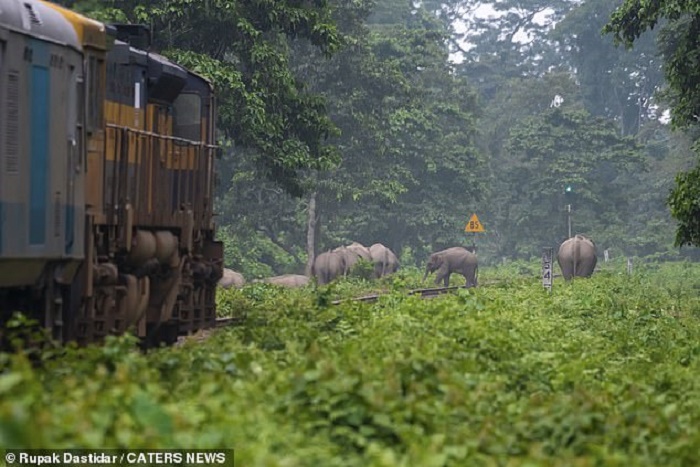
Sri Lanka has signed a memorandum of understanding to deploy advanced detection systems along railway tracks in an effort to reduce fatal collisions between trains and wild elephants. The public-private partnership project will begin pilot testing next month at 13 high-risk locations.
A memorandum of understanding aimed at reducing elephant-train collisions was signed on September 1st at the President's Media Centre under the Clean Sri Lanka programme. The initiative represents a coordinated effort between the Railway Department, Department of Wildlife Conservation, and Forest Conservation Department, with financial support from People's Bank.
The detection system combines multiple technologies to identify and alert drivers to the presence of elephants. The setup includes three-beam detection, passive infrared sensors, automatic temperature sensors, and tamper alarms capable of identifying animals weighing over 20 kilograms. Signal lights displaying red, yellow, or green will be installed on both sides of railway tracks, while a dedicated display screen in locomotive cabs will show drivers the precise location of any detected elephants.
A successful demonstration of the technology took place at the Pinnawala Elephant Orphanage, followed by the preparation of a technical report. The pilot phase will commence next month across 13 railway sections identified as high-risk zones for elephant accidents. To maintain transparency, a public website has been developed to allow ongoing monitoring of the project's progress.
The agreement was signed by representatives from each participating organization: the Railway Department's Additional General Manager P.D.S.B. Chandrasena, Wildlife Conservation Director General M.S.L.R.P. Marasinghe, Forests Conservator General S.C. Palamakuumbura, and People's Bank Chairman Chandana Guniyangoda.