

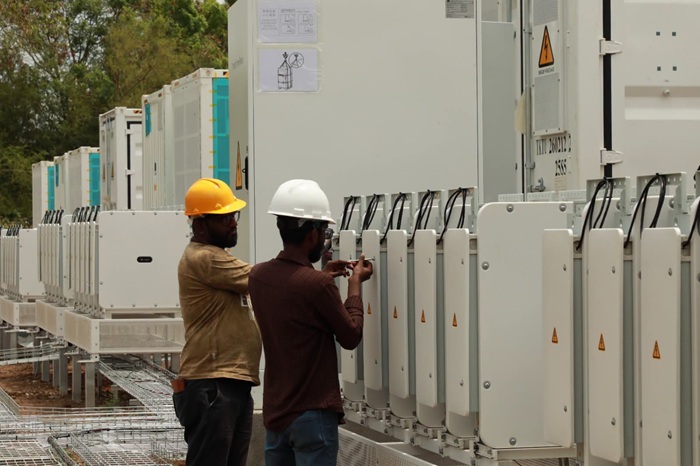
Commercial-scale battery energy storage systems are set to connect to Sri Lanka's electricity grid in early September, with 16 projects nearing completion across transmission substations nationwide.
Sri Lanka is preparing to integrate commercial-scale Battery Energy Storage Systems (BESS) into its national electricity grid starting in early September, marking a significant step in modernizing the country's power infrastructure. The battery systems, which arrived in three shipments during May and June through the Port of Colombo, are being installed at 16 electricity transmission substations across the country. Construction on these projects is advanced, with the Anuradhapura facility reportedly around 85 percent complete.
Each battery storage installation will have a capacity of 10 megawatts and will operate by storing surplus electricity generated from solar power during daylight hours, then releasing this stored energy to the grid during nighttime periods when demand exists. This mechanism is designed to reduce the country's reliance on diesel-powered generation plants during off-peak hours, thereby decreasing fuel consumption and lowering operational costs. Officials expect the systems to enhance grid stability while producing minimal environmental impact.
The National System Operator Ltd. will oversee the control and management of the battery systems, while individual operators will handle maintenance responsibilities. The government has indicated that cost savings and efficiency gains from the initiative may eventually benefit electricity consumers through reduced tariffs. Beyond the current 16 projects, procurement efforts are underway to establish battery storage systems at an additional 23 transmission substations throughout Sri Lanka, suggesting the government's broader commitment to expanding renewable energy integration.






-850368_850x460.jpg)