
Sri Lanka's state-run Petroleum Development Authority announced plans to launch a licensing round for offshore oil and gas exploration this year, seeking to attract international energy companies to develop the nation's hydrocarbon resources.
Sri Lanka will formally announce details of its oil and gas exploration licensing round on Tuesday, according to the Petroleum Development Authority (PDASL). The initiative represents a strategic effort to invite multinational energy companies to explore and develop offshore reserves, with authorities emphasizing that such development would strengthen the country's energy security and support industrial expansion.
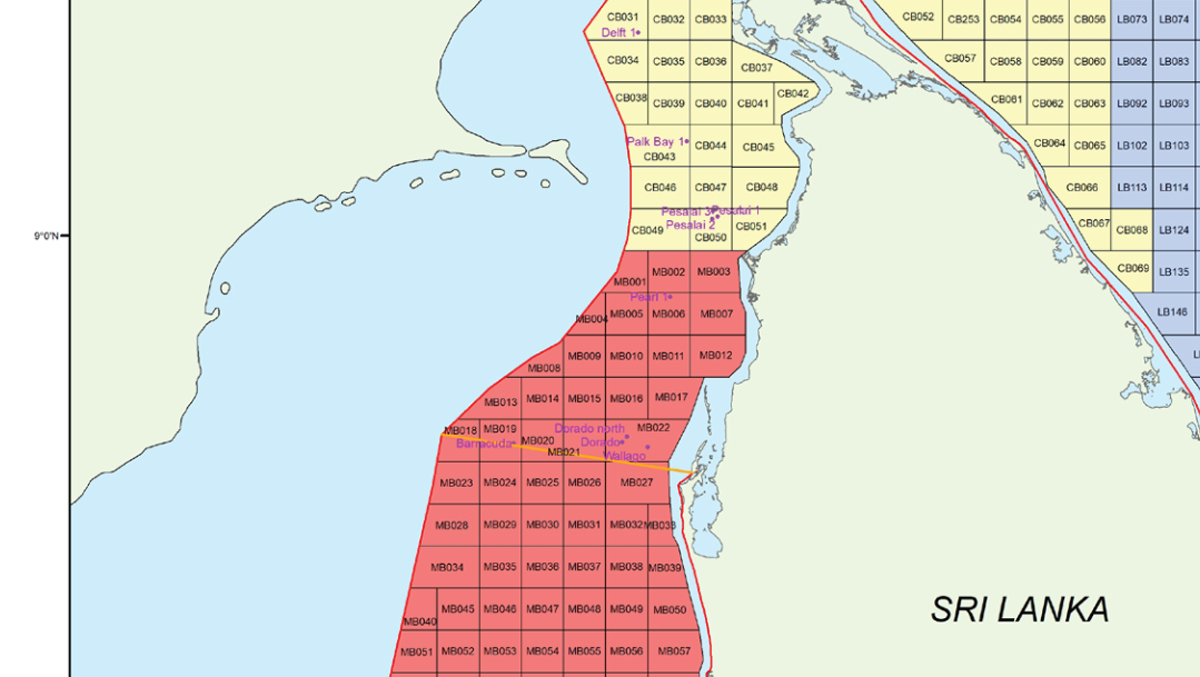
Exploration efforts in Sri Lankan waters date back to the late 1960s, initially concentrating on shallow offshore areas in the Gulf of Mannar and the Cauvery Basin. A significant breakthrough occurred in 2011 when Cairn Lanka discovered commercially viable natural gas accumulations in deepwater wells within the Mannar Basin. However, the venture faced considerable obstacles related to deepwater extraction complexity, insufficient domestic infrastructure, and shifting global energy markets. Cairn subsequently withdrew from the block in 2015 without achieving commercial production.
To revitalize foreign investment and reduce dependence on coal and oil imports, Sri Lanka has modernized its regulatory framework. The Petroleum Resources Act of 2021 and the establishment of the PDASL have updated offshore acreage block mapping and exploration rights management. The country has also implemented new joint-study regulations and licensing structures designed to attract major international oil and gas companies. These efforts focus on three primary sedimentary basins—Mannar, Cauvery, and Lanka—where substantial hydrocarbon potential is estimated to exist.