
Sri Lanka's meteorological authorities warn of a 69 percent probability that the current El Niño phenomenon could become the strongest in 75 years, potentially bringing severe droughts and intense rainfall to different regions across the country.
The Department of Meteorology has issued a significant climate warning for Sri Lanka, indicating that the ongoing El Niño event in the Pacific Ocean may intensify into an exceptionally powerful weather phenomenon. According to Director General Ajith Wijemannage, international forecasting centres predict a 69 percent probability that the El Niño could develop into the strongest event recorded in the past 75 years. Global prediction centres, particularly the NOAA Prediction Center, forecast with over 90 percent certainty that the phenomenon will strengthen considerably by October through December.
Current measurements show Pacific Ocean temperatures have already risen 2.2 degrees Celsius above normal levels, with projections suggesting further increases to around 3.4-3.5 degrees Celsius by November and December. The Australian Bureau of Meteorology indicates that temperatures of this magnitude have not been recorded since 1900. Using the Oceanic Niño Index scale, scientists currently measure moderate El Niño conditions at 1.4 degrees Celsius, with values exceeding 1.0 considered moderate and those above 0.5 classified as El Niño conditions.
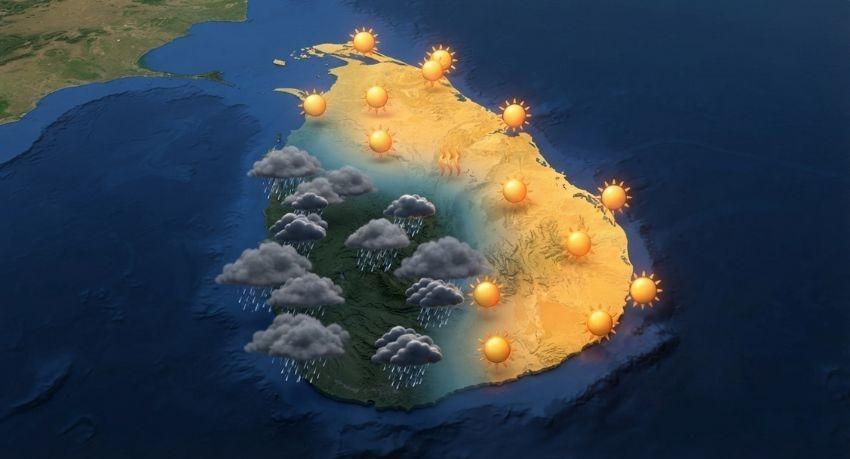
The meteorological department predicts a complex weather pattern combining both extremes rather than sustained drought or rainfall. Northern, North Central, and Eastern Provinces are expected to experience below-normal precipitation through early September, while southwestern and western regions will receive periodic rainfall. From late September onwards, rainfall activity is anticipated to increase significantly, with October and November expected to see above-average precipitation that may extend into early January. The Northeast Monsoon's activation during December and January will particularly affect the northern and eastern regions.
The warming Pacific patterns are already affecting Sri Lanka, with several reservoirs declining and agricultural communities monitoring weather conditions closely. While the full impact remains uncertain, meteorologists emphasize that the coming months will present significant climate variability requiring careful monitoring and preparation.