

A prominent international relations expert has highlighted the need for value-based politics and humanitarianism as global power becomes increasingly distributed among multiple actors rather than concentrated in traditional centers.
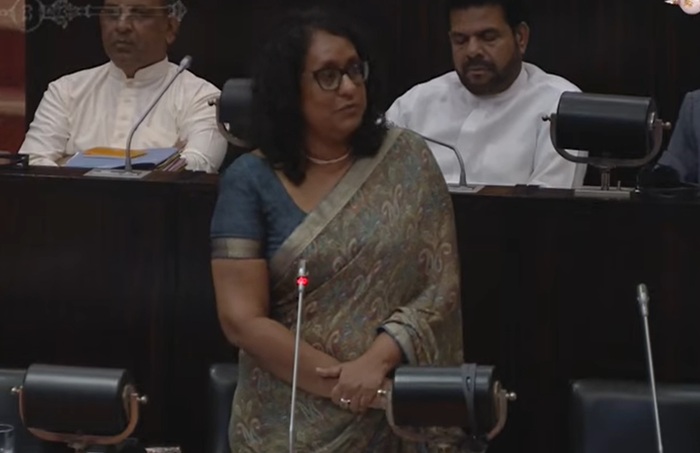
The question of sustaining humanistic values in an increasingly decentralized world order formed the centerpiece of a recent public lecture in Colombo. Distinguished Professor Amitav Acharya of American University presented the 'Professor Shelton U. Kodikara Memorial Oration,' organized by the Regional Centre for Strategic Studies and the Bandaranaike Centre for International Studies on August 8th. Acharya described the emerging international system as a "Global Multiplex" where power is distributed across great powers, middle powers, regional powers, international organizations, and non-state actors rather than concentrated in any single center.
Evidence of this power redistribution is visible across multiple domains. The rise of BRICS, China's expanding global influence, and Iran's successful resistance to US military intervention in West Asia demonstrate the waning of Western-centric international relations. Regional power-sharing arrangements, including the emergence of what has been termed an "Islamic NATO" centered on Turkey, Saudi Arabia, and Pakistan, further illustrate this shift. Non-governmental actors have also expanded their influence, with approximately 36 global NGOs now actively shaping climate change policy alongside traditional international institutions.
However, this fragmentation of power raises critical security concerns. According to the speakers at the memorial oration, the proliferation of military capabilities and strategies based on mutual assured destruction paradoxically threatens global stability rather than enhancing it. Former Sri Lankan President Chandrika Bandaranaike Kumaratunga emphasized the importance of Non-alignment principles and equidistance diplomacy, advocating that developing nations maintain independence from great power rivalries while advancing humanitarian values.
The timing of these discussions coincided with World Humanitarian Day and a Médecins sans Frontières forum in Colombo focused on "Envisioning the Future of Humanitarianism." Both events underscored the necessity of embedding humanitarian principles—neutrality, independence, and impartiality—into international affairs. Speakers argued that addressing global insecurity requires moving beyond military-industrial logic toward value-based politics, and suggested that coordinated efforts among religious institutions under UN facilitation could help cultivate the global conscience necessary to sustain humanistic principles.