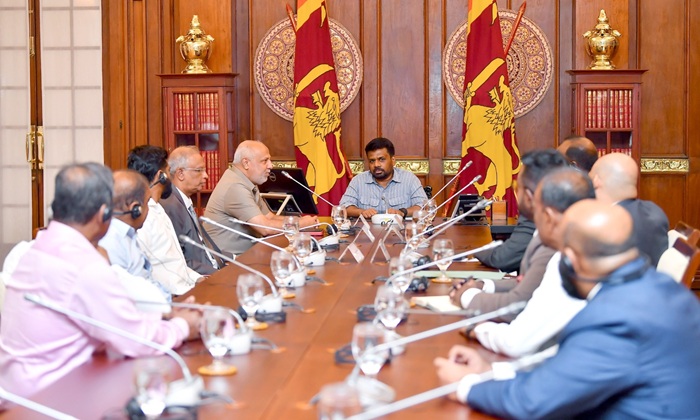
President Anura Kumara Dissanayake held talks with representatives of six Tamil and Muslim political parties to address constitutional reform, Provincial Council elections, and concerns affecting communities in the North, East, and plantation areas.
President Anura Kumara Dissanayake met with delegates from six Tamil and Muslim political parties at the Presidential Secretariat on Monday to discuss significant governance and community concerns. The alliance, representing the All Ceylon Makkal Congress, Ceylon Workers' Congress, Democratic Tamil National Alliance, Ilankai Tamil Arasu Kachchi, Sri Lanka Muslim Congress, and Tamil Progressive Alliance, raised multiple issues including constitutional amendments, electoral procedures, and land disputes affecting Tamil-speaking and plantation communities.
The President emphasized that while constitutional reform and abolition of the executive presidency remain government priorities, building a broad national consensus must take precedence over rushed amendments. ITAK General Secretary M.A. Sumanthiran warned against repeating past mistakes where constitutions were introduced unilaterally, calling instead for inclusive national dialogue. President Dissanayake noted that a Delimitation Commission has been appointed to examine Provincial Council election procedures and said parliamentary dialogue will continue on these matters.
The meeting addressed several community development initiatives. The government's proposal to grant estate workers legal ownership of 10-perch residential plots was welcomed by representatives, with plans to include such provisions when plantation lease agreements come up for renewal before 2042. On housing, the President announced plans to construct 13,000 homes for conflict-displaced families across 2027 and 2028 budgets, with temporary housing and rental assistance for families affected by Cyclone Ditwah pending permanent accommodation.
Challenges facing plantation workers also featured prominently, with concerns raised about utility bill payments despite receiving house ownership through Indian-assisted housing projects. The President indicated that larger budget allocations for the Ministry of Plantation and Community Infrastructure would address such issues and proposed integrating the Thondaman and Nevida foundations for economic relief. The President concluded by urging the alliance to direct focus toward common public concerns to maintain social unity.