On what would have been his 102nd birth anniversary this month, the work of Dr. Raja de Silva, former Commissioner of Archaeology, continues to reshape how scholars interpret Sri Lanka's ancient monuments by prioritizing physical evidence over historical texts.
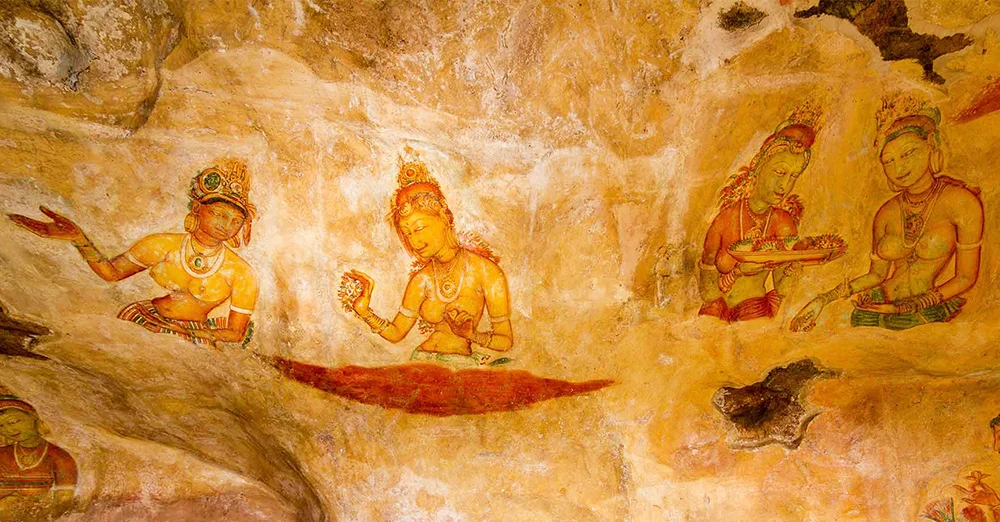
Dr. Raja de Silva, who served as Commissioner of Archaeology from 1967 to 1979, fundamentally altered the study of South Asian heritage by applying strict empirical analysis to ancient structures. Originally trained as a chemist, de Silva gained initial recognition for conserving the damaged frescoes at Sigiriya in 1967 alongside Italian conservator Luciano Maranzi. However, his most significant contribution came through challenging how historians have traditionally interpreted major monuments across the region.
De Silva's central argument addressed a widespread problem in heritage scholarship: the uncritical acceptance of ancient literary texts as historical fact without verification against physical archaeological evidence. Using Sigiriya as his primary case study, he questioned the long-accepted narrative, derived from the Pali chronicle Cûḷavaṃsa, that the site functioned as a fifth-century palace fortress built by King Kassapa I. Through material analysis, de Silva demonstrated that Sigiriya's architectural layout bore no resemblance to a functional royal capital or defensive structure. Instead, he argued the evidence pointed to a large monastic complex spanning centuries, with Mahâyâna Buddhist characteristics reflected in its frescoes, which he compared to sacred artwork at the Ajanta caves in India.
De Silva's methodology reflected broader scholarly concerns about how ancient texts encode the biases of their authors—typically elite scribes, priests, and monks whose perspectives did not necessarily reflect wider historical reality. His work paralleled documented cases where literary traditions omitted entire civilizations, such as how ancient Sanskrit texts ignored the Bronze Age Indus Valley Civilization until archaeological excavation in the 1920s revealed its existence. Similarly, competing Buddhist chronicles presented conflicting accounts of historical figures like Emperor Ashoka to advance sectarian interests, a pattern de Silva identified at Sigiriya.
Two years after his death, de Silva's legacy has influenced contemporary archaeological practice across South Asia, particularly in approaches that prioritize material evidence and question established narratives. His work demonstrated that rigorous scientific examination of heritage sites serves not to diminish cultural pride, but to construct more accurate understandings of the past by moving beyond the limitations of historical chronicles.