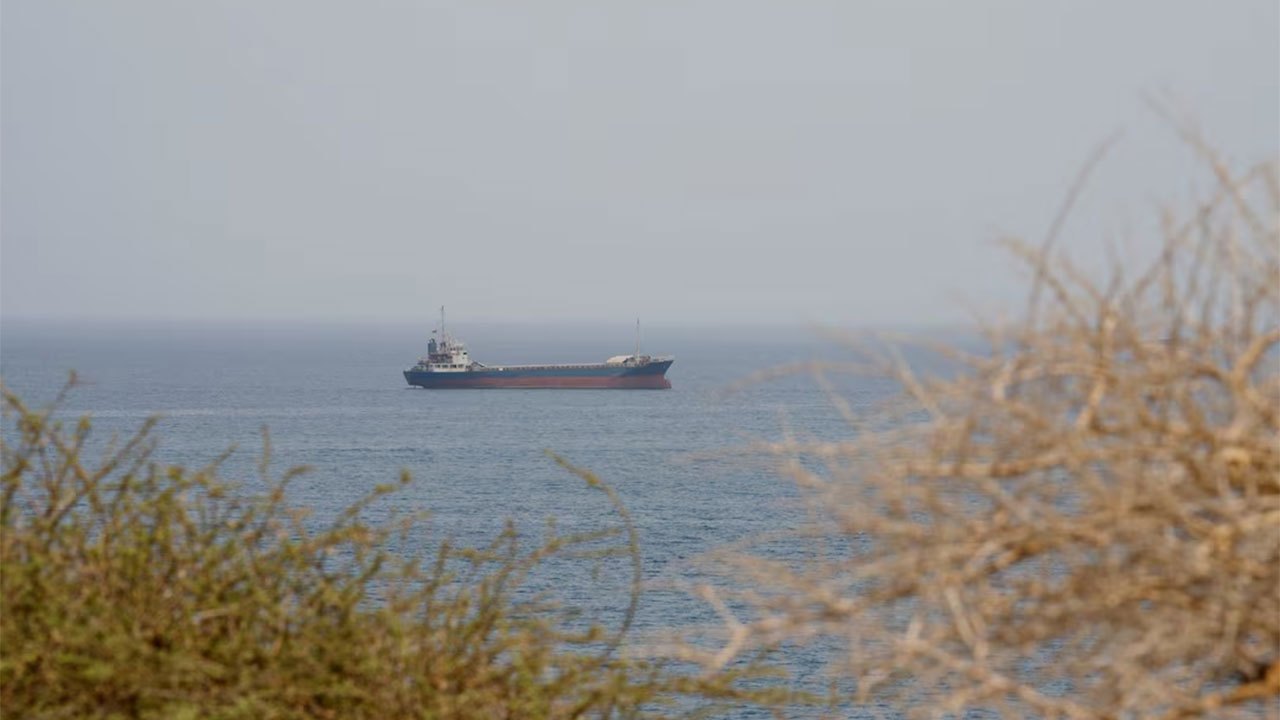
U.S. Defense Secretary Pete Hegseth stated that the American military possesses sufficient resources to sustain a naval blockade around Iranian ports for an extended period through continuous ship rotation, as the Trump administration maintains pressure on Tehran amid ongoing regional tensions.
U.S. Defense Secretary Pete Hegseth declared on Thursday that the American military can sustain a blockade of Iranian ports indefinitely by rotating naval vessels in and out of the region as required. Speaking to journalists in Panama following remarks aboard the USS Gridley destroyer, Hegseth indicated that maintaining economic pressure on Iran would continue as long as necessary to support stalled diplomatic negotiations.
President Donald Trump reinforced this position the previous day, stating that the United States maintains complete control of the Strait of Hormuz and asserting the naval blockade would remain in place. Trump characterized the operation as a "wall of steel" on his Truth Social platform, claiming Iran has no capacity to counter the measure. The blockade was implemented after a conflict began on February 28 with U.S.-Israeli military strikes on Iran. According to American officials, the blockade protects freedom of navigation for vessels traveling to and from non-Iranian ports, though it restricts Iranian shipping.
Since the blockade's implementation, the U.S. military has redirected over 55 commercial vessels attempting to breach it, disabling three ships and boarding two others. In one recent incident, a U.S. Navy helicopter fired Hellfire missiles into the engine room of a Panama-flagged vessel that disregarded warnings. The United States has deployed tens of thousands of troops to the Middle East and positioned more than 20 warships in the region.
Despite months of U.S. military strikes targeting Iranian leadership and military infrastructure, Tehran has maintained its grip on the strategically vital Strait of Hormuz, through which approximately one-fifth of global oil and liquefied natural gas previously transited. Iran has responded with missile and drone attacks against American allies in the region and targeted commercial shipping. Trump faces domestic pressure to resolve the conflict ahead of anticipated midterm elections, with fuel prices remaining a significant concern for his rural supporters.


-850808_850x460.jpg)

-850802_850x460.jpg)