

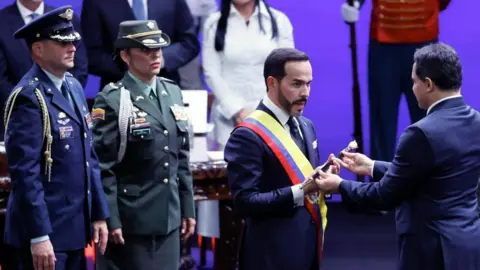
The United States has committed $1 billion in military and security assistance to Colombia following the inauguration of President Abelardo de la Espriella, a Trump-aligned leader who has vowed an aggressive crackdown on drug cartels and armed groups.
Colombia's newly sworn-in President Abelardo de la Espriella received a $1 billion security package from the United States on his first day in office, marking a significant shift in US-Colombian relations. The self-described Trump admirer used his inaugural address to promise an "all-out war" against drug trafficking organisations and armed insurgents, declaring that criminals would find no safe haven in Colombian territory. The US State Department framed the funding as support for "shared goals" of combating organised crime and illegal immigration.
De la Espriella's victory represents part of a broader rightward movement across Latin America amid economic difficulties and security concerns. The new president has abandoned his predecessor Gustavo Petro's "total peace" strategy, which prioritised negotiation with armed groups and crop substitution programmes. Petro's approach, which critics argue failed to reduce violence, contrasted sharply with de la Espriella's promised "iron fist" governance model similar to crackdowns undertaken by right-wing leaders in El Salvador and Ecuador.
The incoming administration has also signalled closer alignment with Washington, with de la Espriella announcing Colombia's membership in Trump's "Shield of the Americas" security initiative. He has pledged strengthened military and diplomatic ties with both the United States and Israel—a stark departure from Petro's previous support for Palestinian causes and criticism of Israeli operations in Gaza. Trump had previously expressed strong backing for de la Espriella's candidacy, predicting an improved bilateral relationship following his June election victory.
De la Espriella's rise, combined with right-wing victories in Peru and potential challenges to Brazil's leftist government, indicates diminishing regional influence for left-leaning leaders. The previous administration had resisted Trump's approach to regional affairs and criticised US influence, warning against Colombia becoming a US "vassal."


-722285-850252_850x460.jpg)