

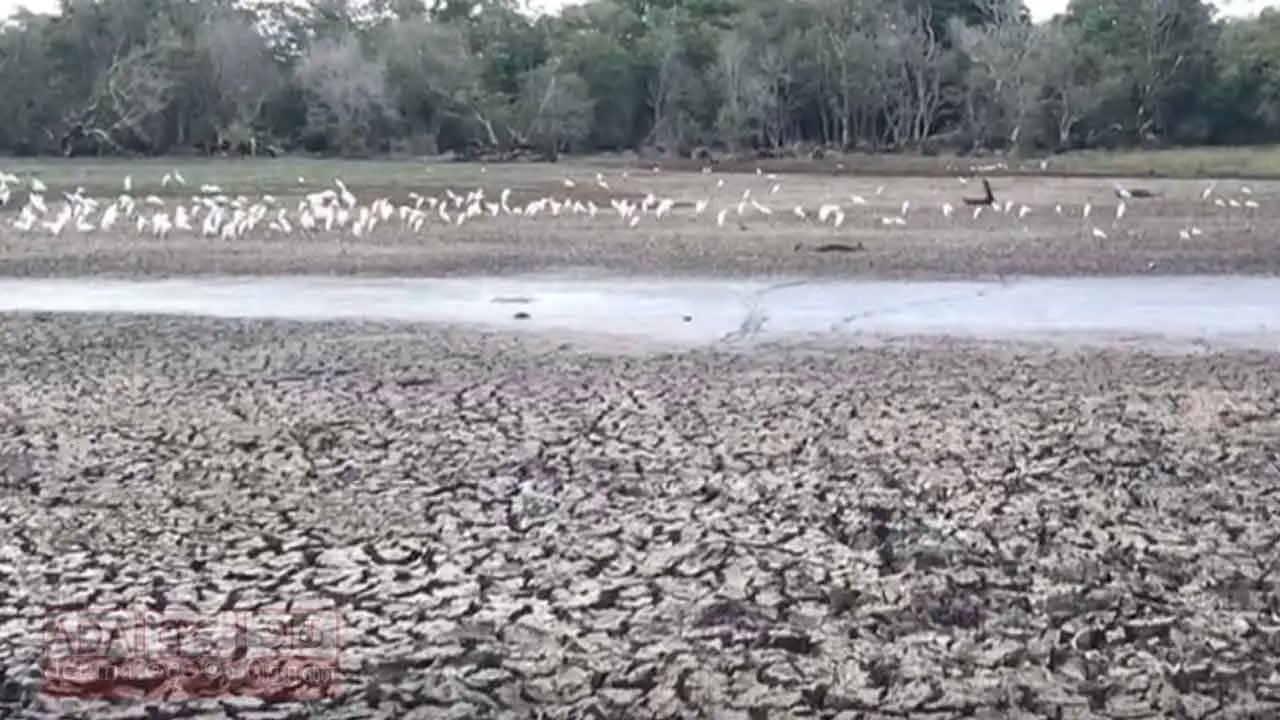
Over 600 irrigation tanks in Anuradhapura have fallen below critical water levels as drought conditions intensify in the Rajarata region, affecting drinking water supply, agriculture, and wildlife.
The Anuradhapura District is facing an acute water crisis, with 612 of its minor irrigation tanks now holding less than 5% of their capacity, according to District Secretary Ranjith Wimalasooriya. The situation has worsened significantly, with 788 tanks out of the district's total of 2,410 having nearly dried up completely due to prolonged dry weather conditions.
While drought is a recurring challenge in the Rajatat region during the July to October period, officials have characterized this year's conditions as exceptionally severe compared to historical patterns. The water shortage has become increasingly concentrated, with more than three-quarters of remaining reserves stored in just seven major reservoirs, leaving most areas vulnerable to further depletion.
The declining water availability has triggered cascading problems across multiple sectors. Communities face mounting difficulties in accessing drinking water, while farmers struggle to irrigate crops and maintain agricultural productivity. The impact extends beyond human populations, as wildlife in the region also faces water scarcity challenges that could affect ecosystems dependent on these water sources.
District officials have acknowledged the multifaceted impact of the drought, noting its effects on residents, the natural environment, and animal populations throughout the Rajarata zone. The concentration of remaining water supplies in a limited number of major reservoirs raises concerns about the district's capacity to sustain its population and agricultural sector during the coming weeks.